Latus Bio
Finding precisely tuned viral vectors for gene therapy in CNS disorders
Last year’s edition of the DCVC Deep Tech Opportunities Report, released in June 2025, explains the global challenges we see as the most critical and the possible solutions we hope to advance through our investing. This is a condensed and updated version of the first section of Chapter 7, about the work of DCVC Bio.
Gene therapy — the quest to cure diseases caused by single-gene defects by replacing or mitigating the missing or mutated genes — is a beautiful idea that’s proved fiendishly difficult to execute. After a series of clinical setbacks in the 1990s and 2000s, funding for gene therapy disappeared and most researchers left the field.
Much later, researchers and companies ventured back into gene therapy using new delivery vehicles for getting DNA into patient’s cells, such as modified adeno-associated viruses (AAV — a natural resident virus in humans) and lentiviruses. Those methods have proved far more specific and therefore safer. But researchers and commercial drug developers have run into new challenges such as vector efficiency — getting the new genes to the right cells, in sufficient numbers to make significant amounts of whatever payload is desired — and difficulties scaling up viral vector production while maintaining quality.
Today, however, a new wave of gene therapy companies is emerging, using new technologies to create safer and more targeted ways of delivering payloads to the cells where they can do their work. One of these is Latus Bio, where DCVC Bio first invested in 2024. The company is confronting the reality that AAVs, the most common vehicles for modern gene therapy, often lack the needed potency, specificity, and manufacturability, and can still cause tissue toxicity and immune side effects.
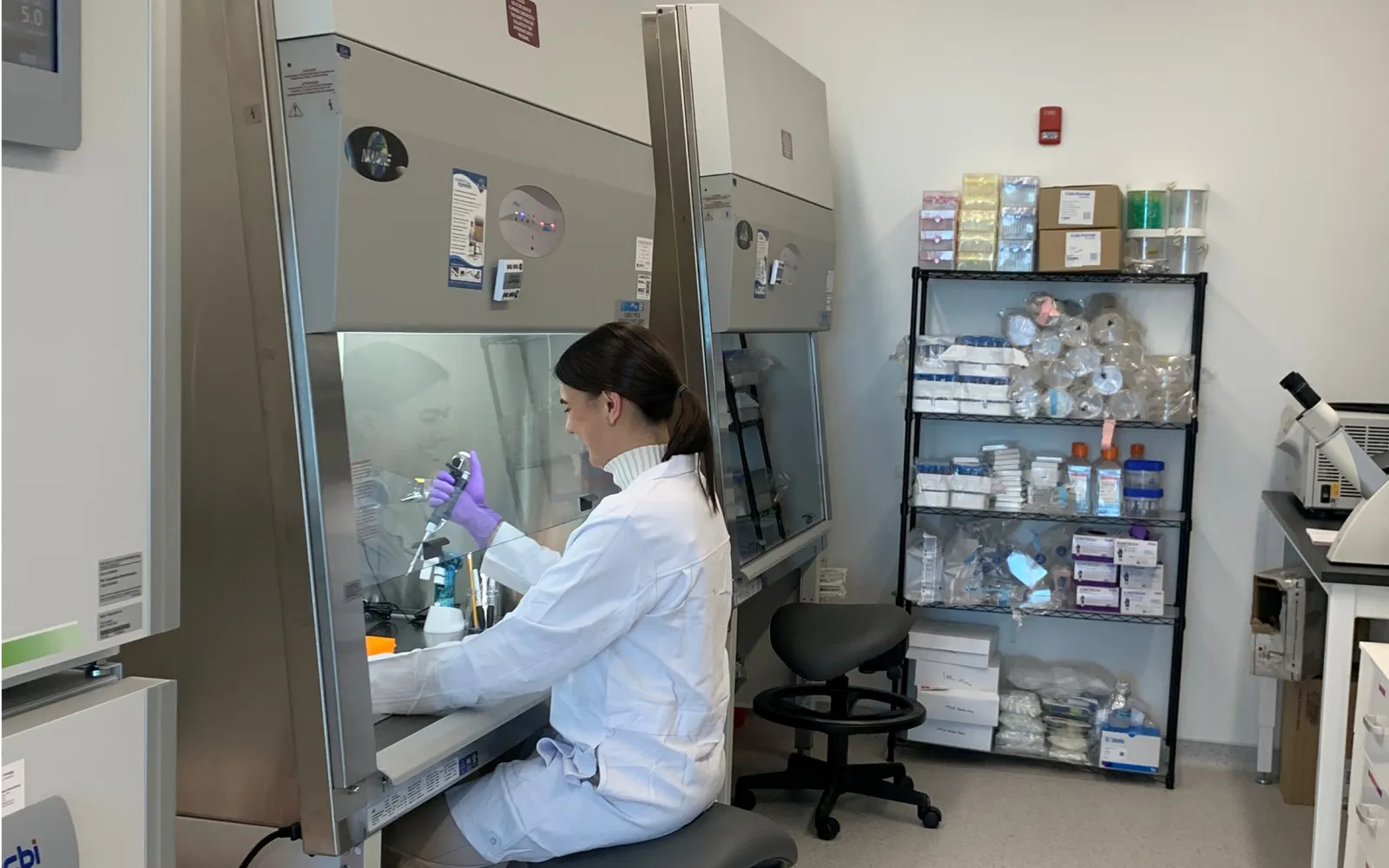
An AAV’s tropism — the specific types of target cells it can “infect” — is determined by the structure of its capsid, the icosahedral shell that protects its DNA cargo. If the capsid structure is well-matched to the target cell type, the virus can bind, enter, and release its curative payload more efficiently. Latus, founded by Dr. Beverly Davidson of the Children’s Hospital of Philadelphia, has built a massively parallel, high-throughput platform for screening a range of modified AAV capsids, looking for those that will deliver genes exactly where they’re needed while limiting toxicity.
The company has developed capsids that will allow treatment of neurological disorders such as Huntington’s disease and Batten disease. It received FDA clearance of its Investigational New Drug application for a drug to treat a form of Batten disease in December 2025, and it plans to follow soon after with a program to address the devastating life sentence of Huntington’s. There, the strategy is not to replace the huntingtin gene itself (the neuronal protein that, when mutated, causes the disease) but to silence the genes for MSH3, which regulates the expansion of the mutated repeat sequence in the disease. Importantly, Latus’ capsid-screening platform allows it to find AAVs that are easy to manufacture, and that are effective at delivering large amounts of curative payloads to specific cells in the brain, the kidney, or the heart.
This specificity will mean lowering off-tissue toxicity, manufacturing complications, dose, and cost, says DCVC Bio managing partner Dr. Kiersten Stead. “Modified AAVs are going to be the workhorses of the industry for delivering genes and other payloads,” she says.
Slowly but surely, then, gene therapy companies are coming to grips with each of the problems that have plagued researchers since the 1990s. Says DCVC Bio managing partner Dr. John Hamer: “We’re starting to see another generation of gene therapies that use some very, very specific targeting technology to target gene therapies to the right cells.”