News
Last year’s edition of the DCVC Deep Tech Opportunities Report, released in June 2025, explains the global challenges we see as the most critical and the possible solutions we hope to advance through our investing. The report’s fourth chapter looks at the key role of water innovation in reindustrialization. This is the second section of that chapter.
Fresh water is a finite yet indispensable resource that’s increasingly costly to obtain and/or remediate. That’s the fundamental realization driving deep tech water innovation; it’s also the fundamental notion behind the cluster of ideas that goes by labels such as water resilience, water neutrality, water replenishment, water balancing, water stewardship, or water offsets.
In a water-neutral development, builders offset 100% of their projected water demand by covering the cost of water-efficiency projects elsewhere. It’s an approach that’s been tested or studied by a handful of cities in Brazil, Mexico, the U.K., and California. And it’s also taking hold in the corporate world. In 2007, Coca-Cola committed to replenish 100 percent of the water used in its finished products globally, and it says it’s been meeting that goal every year since 2015. In 2021, Google joined the water stewardship movement, announcing that by 2030 it aims to replenish 120 percent of the water it consumes at its offices and data centers.
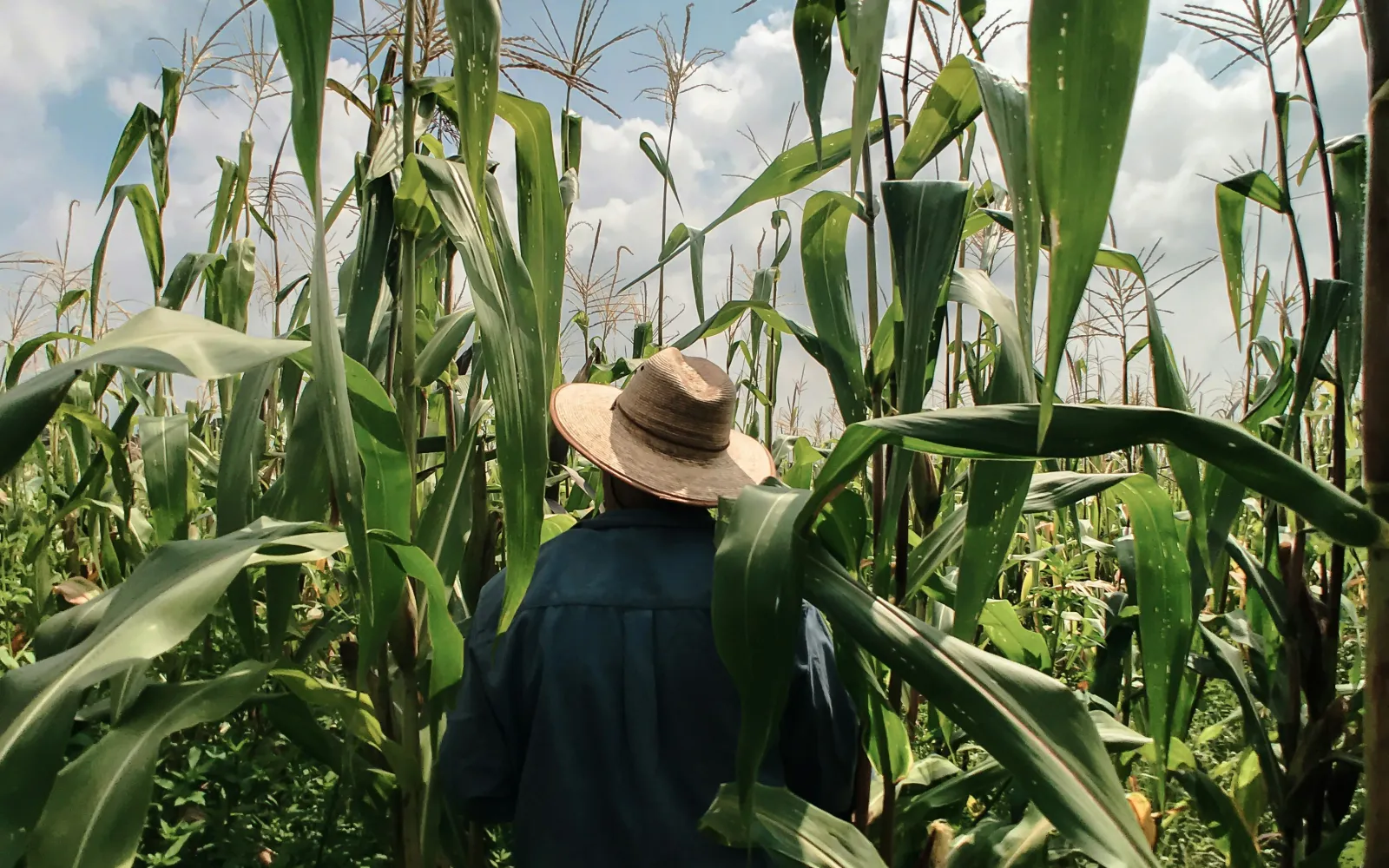
In practice, “replenishment” often translates to support for water conservation projects that will balance or offset corporate activities. Google’s recent collaboration with agtech startup N‑Drip, which aims to replace wasteful flood irrigation with a gravity-powered micro irrigation system, is an example. Google is paying farmers in the Platte River basin of Nebraska to convert 1,000 acres of corn and soybean fields from flood irrigation to N‑Drip’s system, offsetting some of the water use of its data center in Papillion, Neb.
At the same time, Google is paying farmers in southeast Nebraska to adopt water conservation technology from a San Francisco startup called Arable. The company makes sensors that monitor weather, crop growth, soil moisture, and other parameters, feeding the data into software that advises farmers on when and how much to irrigate. In demonstrations, the company says, the Arable system has helped corn and soybean farmers reduce irrigation by 22 percent.
Microsoft, too, has pledged to replenish more water than it consumes by 2030, and said in 2023 that it had invested more than $16 million in 49 projects around the world, saving more than 16 billion gallons of water.
“When we think about water being a constraint on industrial revitalization, companies like Microsoft and Google stepping up for water offsets is a great thing,” says DCVC operating partner Earl Jones. “Just as with carbon offsets, there has to be validation. We’re still in the early stages. But if it matures into something stable, we could see a lot of industrial companies funding water use reduction. These farm projects can be a way to prime the pump.”