

Aquafortus
Energy-efficient wastewater recovery
Last year’s edition of the DCVC Deep Tech Opportunities Report, released in June 2025, explains the global challenges we see as the most critical and the possible solutions we hope to advance through our investing. The report’s fourth chapter looks at the key role of water innovation in reindustrialization. This is the first section of that chapter.
Water has never been free. The aqueducts of the ancient Persian, Roman, Incan, and Aztec empires were enormously expensive public-works projects designed to keep cities and farms growing. But Rome wasn’t full of hyperscale data centers, which use 400 million gallons of water per day in the U.S. alone. Today, with demand for fresh water reaching new extremes, it’s more important than ever to find new sources of H2O and to lower the cost of obtaining and treating it. These are natural tasks for deep-tech innovators.
One type of water that’s currently viewed by energy producers as a headache — but could be turned into a rich resource, using new technology — is the briny “produced water” that comes out of the ground alongside oil and gas, at a rate of 4 to 6 barrels of produced water for every barrel of oil. In the fossil-rich Permian Basin region of Texas and New Mexico, well operators generate about 840 million gallons of produced water each day. The current practice is to inject most of it back underground, but that loosens geologic formations and causes earthquakes. On top of that, well operators are “literally running out of underground pore space to dispose of this water,” says DCVC operating partner Earl Jones. “If you can’t get rid of the water, there’s no oil.”
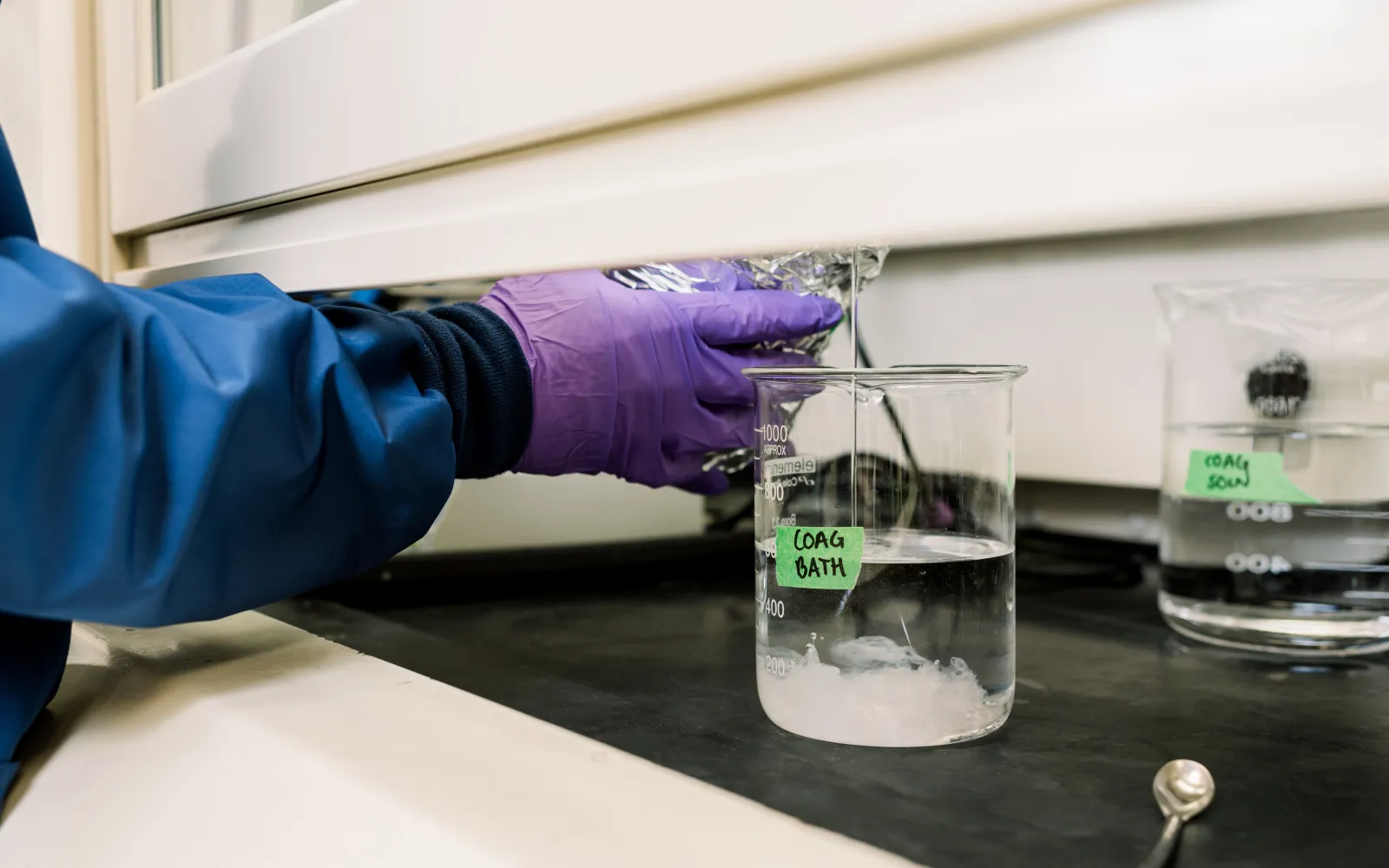
Aquafortus, which we’ve backed since 2021, is scaling up a solvent extraction technology that recovers clean water — as well as valuable minerals — from produced brine. The company cycles brine through a series of towers full of absorbent and regenerant materials that trap water and isolate salts. The clean water can be reused for industrial purposes, while the salts can be processed to extract industry-critical minerals such as lithium, magnesium, cobalt, strontium, bromine, and iodine. Aquafortus’ field research facility in Colorado has already produced more than 20,000 barrels of clean water from briny wastewater, and the company has agreements to scale up the process for a number of oil and gas companies, including Occidental Petroleum. “What we’re trying to do is reframe this from a discussion of how you dispose of a waste product to how do we extract value from a resource and create a vision of water abundance,” Jones says.
Another DCVC portfolio company that’s also in the business of helping customers reclaim, rather that discharge, dirty water is ZwitterCo. It’s a developer of superfiltration and reverse-osmosis membranes that stick to water rather than the compounds they filter out. They do that by incorporating zwitterions — molecules that have equal numbers of positively and negatively charged branches and that can therefore attract H2O and repel the proteins, fats, oils, and other organic compounds that normally foul or clog water filters and reduce their throughput. ZwitterCo membranes still clog up, but far more slowly — and they can be cleaned much more easily, without caustic chemicals, which means they don’t need to be taken out of service or replaced nearly as often as traditional filters. The company already has more than 50 customers across 15 countries, including farms, which can now filter the water out of manure and reuse it for crop irrigation.
Another DCVC-backed water-tech company, Tidal Metals, is building pumps that extract magnesium from seawater. The upshot could be a cheap, clean, domestic supply of this extremely useful metal. Tidal, Aquafortus, and ZwitterCo each show in their own ways how advanced water treatment is a win-win proposition. The technology doesn’t simply provide the clean water we need to run factories and power plants and irrigate farms, but it turns waste products into assets and creates new sources of critical minerals and materials. In the end, we believe, American reindustrialization and the transition to zero-carbon energy won’t happen without cheap, energy-efficient water reuse as part of the package.