
Circularity Fuels
Powering today’s industries with tomorrow’s fuels
Last year’s edition of the DCVC Deep Tech Opportunities Report, released in June 2025, explains the global challenges we see as the most critical and the possible solutions we hope to advance through our investing. This is a condensed version of the fourth section of the report’s third chapter.
Methane’s big advantages as a fuel are that its carbon-hydrogen bonds carry so much energy, and that it can be stored and transported so easily and cheaply. Its huge downside is that when released into the atmosphere it absorbs infrared radiation — trapping 120 times as much heat as CO2 does — meaning that we can’t afford to keep freeing more of it from fossil deposits and letting it leak away.
The mission at DCVC-incubated Circularity Fuels is to replace fossil-derived methane by finding ways to find efficient ways to make the gas, as well as hydrocarbon fuels and feedstocks, from the carbon that’s already all around us. The company’s Ouro Reactor uses renewable electricity to make CO2 from the air or from industrial sources into CH4 and other hydrocarbons. In a way, it’s the inverse of an internal combustion engine. “Instead of burning hydrocarbons to make energy, we’re taking renewable energy from solar farms or wind farms and turning that energy into hydrocarbon fuels,” says Stephen Beaton, Circularity’s CEO. At industrial scale, this carbon-neutral process would leverage the large existing network of natural gas pipelines and storage tanks, and the company “would be able to take advantage of the best parts of the fossil fuel infrastructure while avoiding the most costly processes,” Beaton says. “That would be the quickest way to get off of fossil fuels.”
But there’s one important thing to note about that existing infrastructure: it’s leaky and needs upgrades. A Stanford-led study published last year in Nature estimated that U.S. natural gas wells, pipelines, storage, and transmission facilities emit at least 6 million tons of methane annually, three times greater than the official government estimate. The scale of the waste and pollution is startling. In some areas, such as the New Mexico portion of the Permian Basin, more than nine percent of all methane produced escapes into the air.
Most of the data for the Stanford study was provided by Insight M, a DCVC portfolio company that conducts high-frequency aerial surveys of oil and gas basins and infrastructure. The company’s proprietary spectrometers are mounted on small planes and detect methane by measuring the absorption of reflected sunlight. The goal is not to shame big emitters but simply to provide reliable data they can use to identify leaks and “keep gas in the pipe,” to quote Insight M. The company says its reports have saved customers $500 million in gas value and helped to keep over 125 billion cubic feet (2.5 million metric tons) of methane out of the atmosphere — which, in CO2-equivalent terms, is like taking 50 million cars off the road for a year. “The free world needs more energy, but more cleanly, and that’s one of the throughlines” both at DCVC and at Insight M, says DCVC managing partner Matt Ocko.
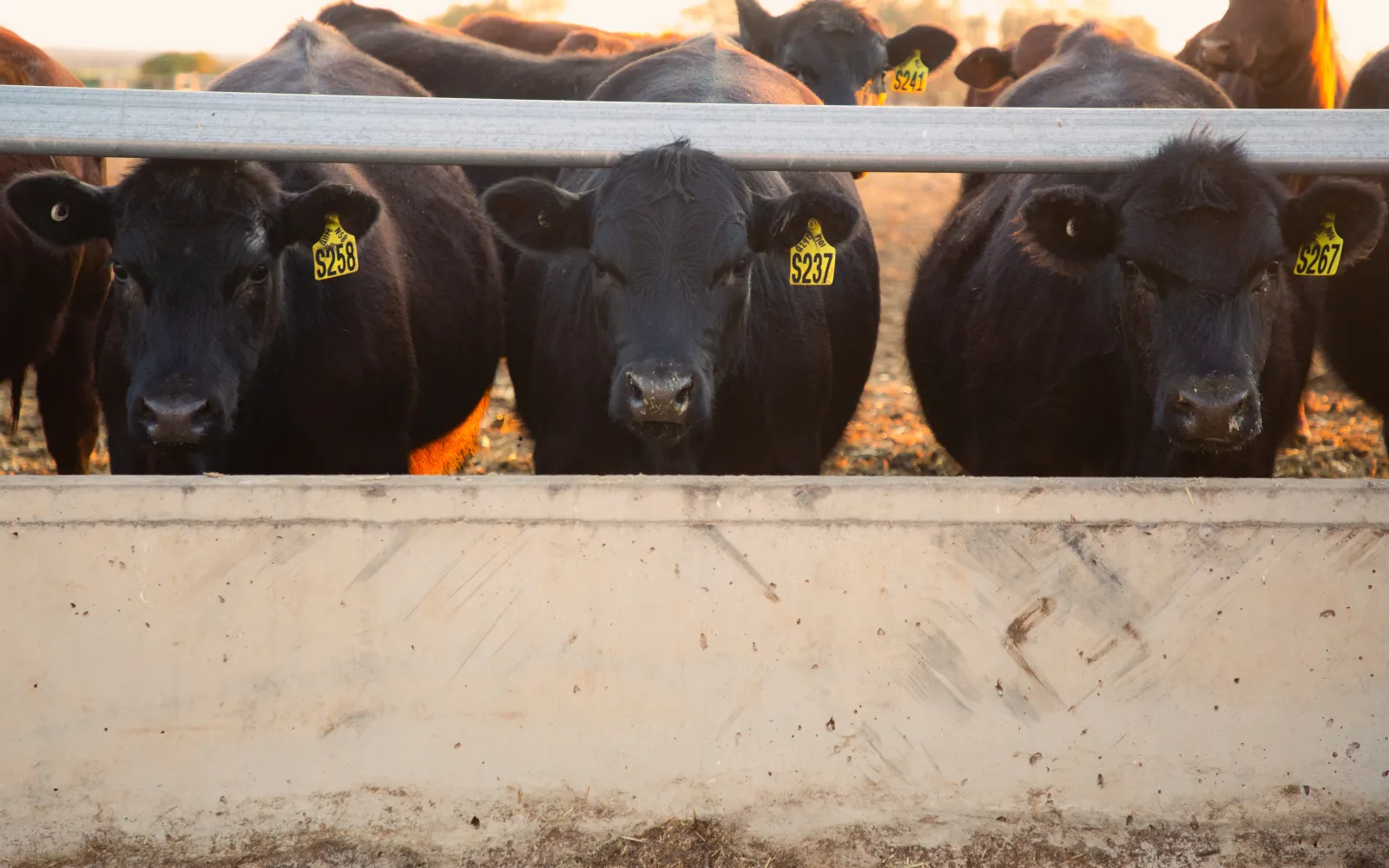
Believe it or not, however, the single biggest source of human-induced methane emissions isn’t the oil and gas industry. It’s cattle.
As grass and other foods ferment in the stomachs of cows and steers, as well as goats, sheep, and buffaloes, methane is a natural byproduct. Globally, these animals belch 80 to 95 million metric tons of methane per year. Fortunately, there’s a cattle feed additive, derived from a red seaweed called Asparagopsis, that can reduce enteric fermentation by up to 90 percent. CH4 Global, which both DCVC and DCVC Bio have backed since 2021, launched the world’s first commercial-scale Asparagopsis production facility this year, and it has already won approval to administer its Methane Tamer additive at cattle feed lots in Australia. The company expects that it will help avert a billion tons of methane emissions by 2030. “That’s a massive agricultural benefit,” Ocko says. “They let people continue to deliver large volumes of healthy food with less impact.”