
Valar Labs
Using AI models trained on digital pathology images to help oncologists make smarter cancer treatment decisions
Pancreatic cancer patients and their doctors face a crucial decision between two established treatment paths, which — if chosen correctly — can add years or months to patients’ lives. This cancer is notoriously difficult to treat, and oncologists have developed two alternative chemotherapy combinations: FOLFIRINOX (folinic acid, fluorouracil, irinotecan, and oxaliplatin) and gemcitabine with nab-paclitaxel. Patients respond differently to the two regimens. If they receive the “right” one — the one better suited to their particular form of cancer — it can radically improve their prognosis. The problem is that doctors don’t have a good way to choose, other than assessing patients’ physical condition. (FOLFIRINOX is more aggressive and generally reserved for younger, fitter patients.) It’s a common dilemma in oncology: an A vs. B treatment decision with no persuasive biological evidence to support either one.
So it’s welcome news that Valar Labs, a company we’ve backed since 2024, has released a new AI-based test called Vitara that can predict, based solely on pathology slides, whether patients will respond better to FOLFIRINOX (F‑chemo for short) or gemcitabine/nab-paclitaxel (G‑chemo). This week the company also shared data validating the test in a major study published in the peer-reviewed Journal of Clinical Oncology. (Read the journal article here and Valar’s announcement here.)
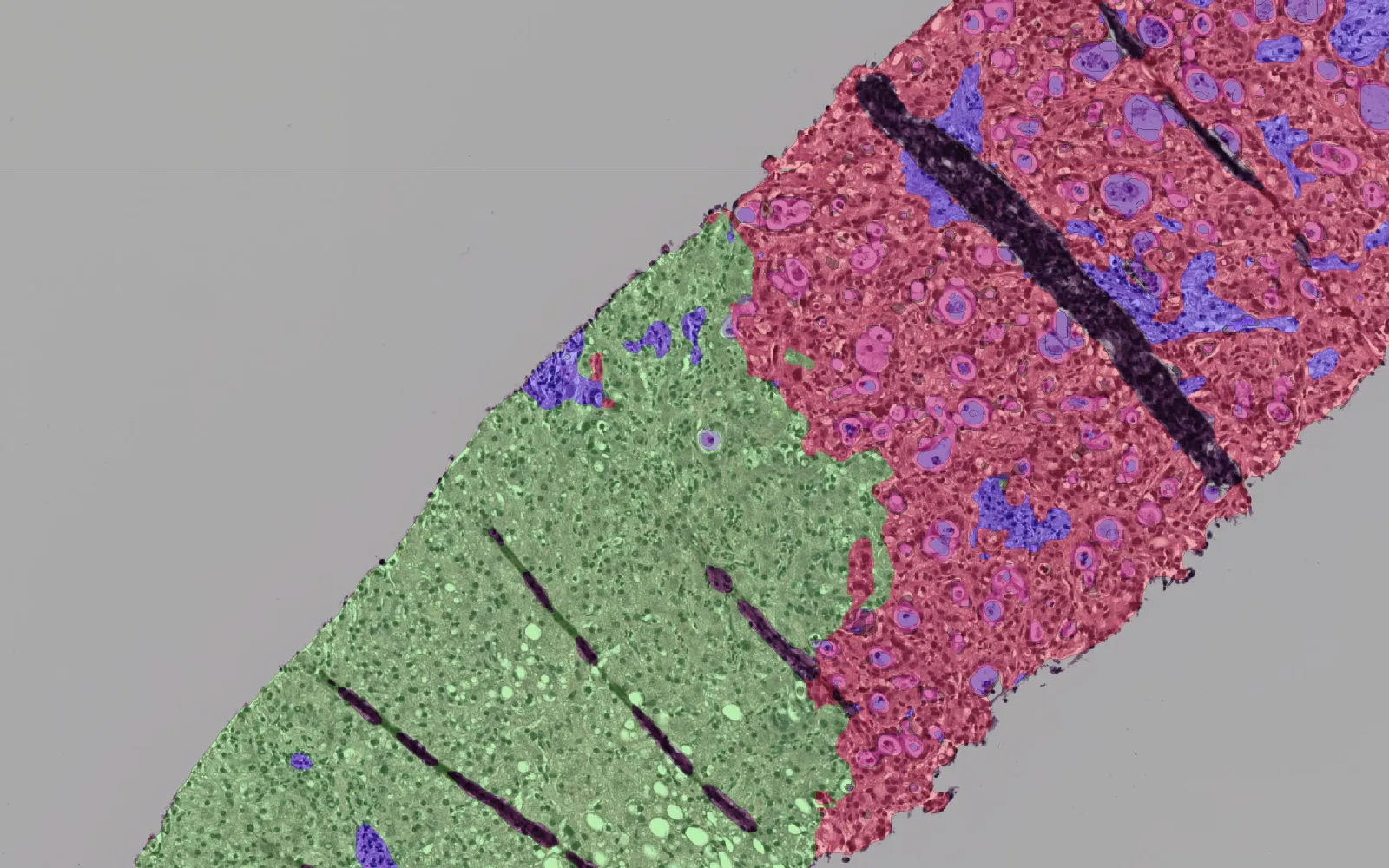
Valar (as explained in a previous post) uses histology data from real patients to train machine learning models to scan images of tissue slices from tumors and identify subtle and complex predictors of cancer pathology such as nuclei size, cell orientation, and immune cell infiltration. The study published in JCO showed that, indeed, there are distinct predictive features in pancreatic tumor tissue — features visible to the models, but not to human pathologists — that correlate with responses to F‑chemo or G‑chemo.
The Valar study validated its predictive capabilities by running the Vitara test on tumor histology slides from 173 pancreatic cancer patients who had already received either F‑chemo or G‑chemo. Where patients Vitara identified as likely G‑chemo-responders had actually received G‑chemo, they lived 2.9 months longer than G‑chemo-responders who had received F‑chemo. Conversely, when predicted F‑chemo-responders received F‑chemo, they lived 2.7 months longer than those who got G‑chemo.
The study’s striking bottom line: more than 40 percent of the patients in the cohort likely would have fared better if they’d received the opposite treatment from the one they got — showing the limitations of the current trial-and-error approach.
This result is great news for pancreatic cancer patients, but it has much broader implications. Vitara is the second AI-based test Valar has brought to market. The first, Vesta, predicts whether bladder cancer patients will respond to an immune-stimulating treatment called Bacillus Calmette-Guerin (BCG). Using the same approach to create a second product in a completely different indication shows that Valar’s approach is repeatable and could, in principle, extend across many more cancer types. The company’s long-term vision: every time a clinician is making a tough treatment decision for cancer, Valar is there as a co-pilot.
Valar’s approach is even more appealing because, unlike the profusion of RNA- or DNA-based liquid biopsy cancer tests run in wet labs, it’s a purely in silico test. It uses histology slides that are already collected as part of standard cancer diagnostic procedures. That makes the test less expensive and easier to incorporate into existing workflows and reimbursement processes, and it makes Valar itself extremely capital-efficient.
Spurred on by these results, Valar is moving fast and creating new models for new forms of cancer as quickly as their researchers can get their hands on more training data. (For the JCO study Valar obtained data from the Pancreatic Cancer Action Network’s Know Your Tumor molecular profiling initiative and Canada’s COMPASS prospective trial of advanced pancreatic cancer.)
Tests like Vesta and Vitara will never make oncologists obsolete. But we absolutely expect that they will supercharge clinicians’ ability to make the most beneficial treatment decisions.