

Kanvas Biosciences
Mapping the microbiome to improve human health
Last year’s edition of the DCVC Deep Tech Opportunities Report, released in June 2025, explains the global challenges we see as the most critical and the possible solutions we hope to advance through our investing. This is a condensed and updated version of the report’s fifth chapter.
“TechBio companies, first and foremost, set out to create highly structured, proprietary data sets, then run machine learning or other AI models on that data to get to either therapeutic or diagnostic targets,” explains DCVC managing partner Zachary Bogue. In 2024, TechBio was still emerging, but in 2025 it began “hitting its stride, with major proof points,” Bogue says.
We mentioned many of our TechBio portfolio companies in our 2023 and 2024 reports, but all of them have progressed substantially. Relation Therapeutics, for example, is proving that a hybrid system combining single-cell genomics, AI modeling of gene and protein networks, and large-scale lab analytics on effector cells can help identify promising new drug targets for undertreated diseases in less time than conventional drug discovery and development.
An effector cell is a human cell type chosen by Relation for its involvement in a complex disease— say, osteoblasts, a kind of bone cell, in the case of the company’s osteoporosis research — which is then modified using CRISPR and other tools to remove genes the company’s AI model predicts may be contributing to pathology. In the lab, the company studies how knocking out these genes one or two at a time in different cells affects protein expression and other markers (such as mineralization rates, in osteoblasts). Then it deploys more machine-learning algorithms to identify and prioritize the potential disease pathways that could best be modulated with drug molecules.
The work is helping Relation zoom in on possible targets for new osteoporosis drugs — and it’s also attracting the interest of pharmaceutical giants like GSK. In a multifaceted deal announced in December 2024, GSK committed to $108 million in upfront and collaboration-based payments to develop drugs for fibrotic disease and osteoarthritis. Relation is also in line for potential preclinical, development, commercial, and sales milestone payments averaging $200 million per target, along with tiered royalties on net sales of products. We believe that was the largest deal ever for a seed-stage biotech or TechBio company. It was followed in 2025 by an agreement with Novartis that will bring $55 million in upfront payments and up to $1.7 billion in milestone payments for work on atopic diseases.
“If we want life-changing medicines for people who are at risk for conditions like osteoporosis, we need to understand complex diseases. What’s unique about Relation is they have had a ‘lab in the loop’ from the beginning, using effector cells to test their hypotheses,” says DCVC general partner Jason Pontin. “With these GSK and Novartis deals…Relation has shown that they can massively increase the number of targets, and reduce the failure rates and time involved in drug development.”
Other DCVC- and DCVC Bio – backed TechBio companies are advancing just as rapidly:
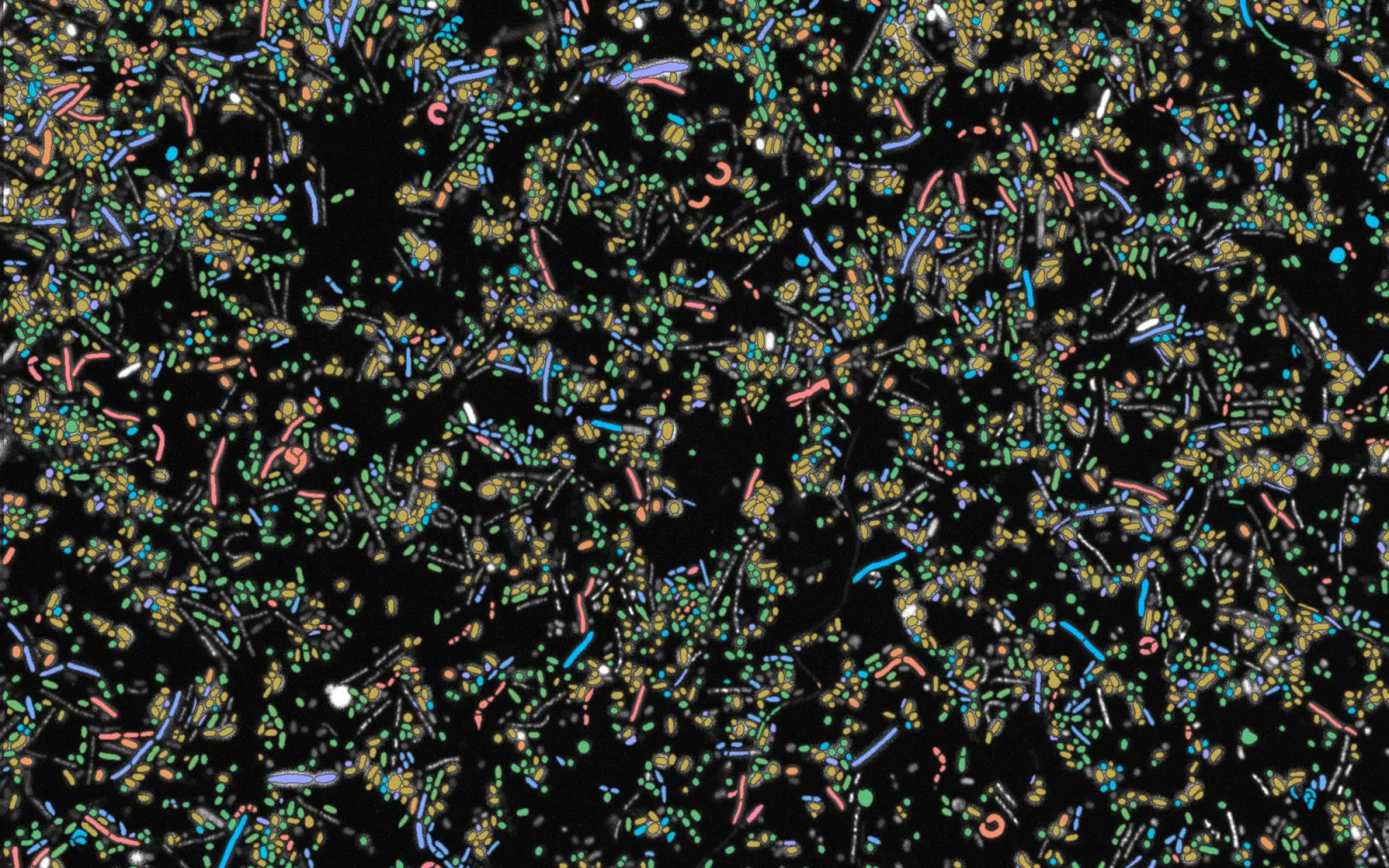
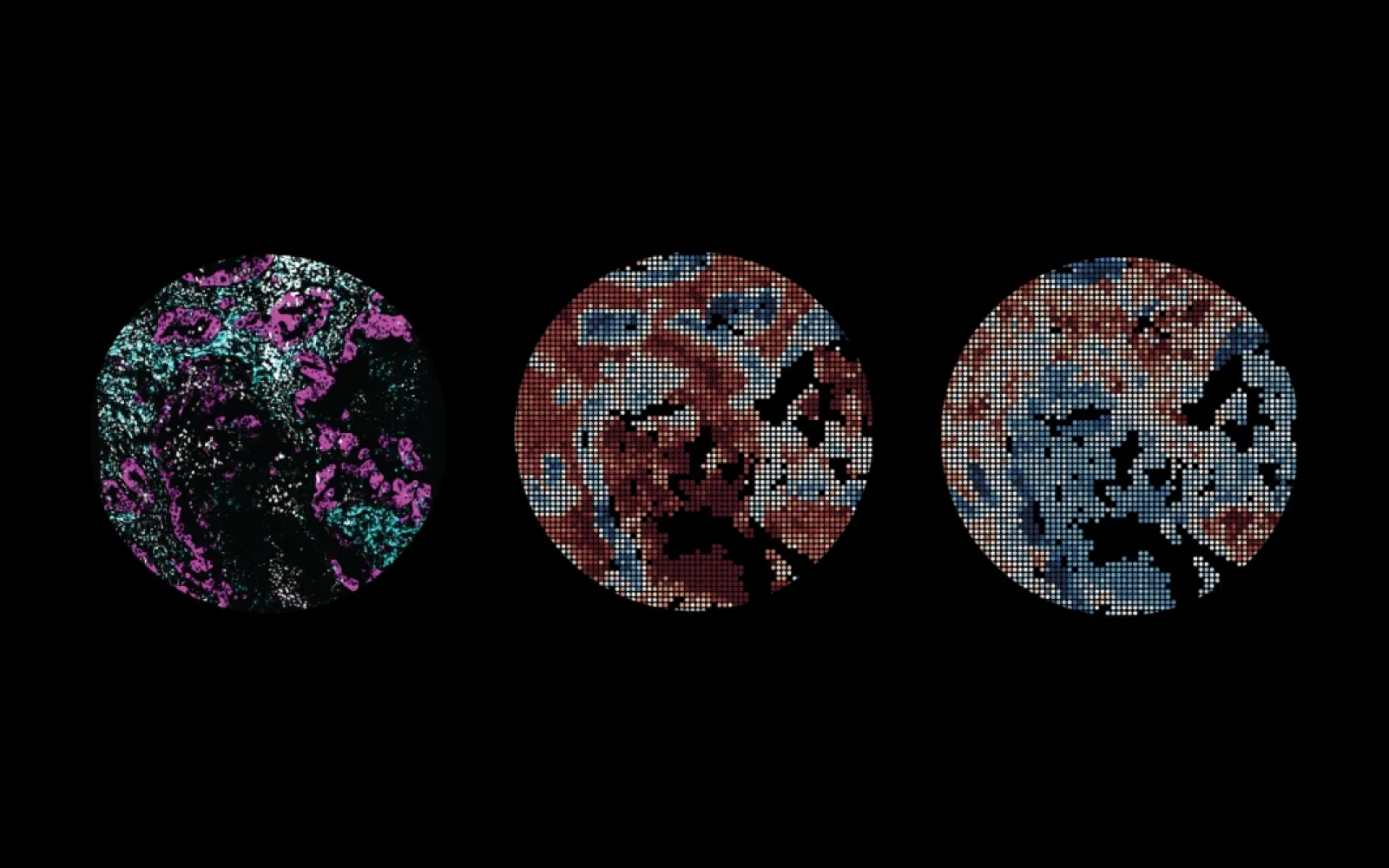
Kanvas Biosciences is proving that understanding the spatial relations of gene-protein interactions inside and between individual cells, especially at the gut-microbiome boundary, can help identify drugs that improve immune function. It’s planning clinical trials of two precision microbiome therapeutics, or PMTs, that contain proprietary mixes of beneficial bacteria identified by the company’s spatial biology platform as active in the guts of successful stool transplant donors. The company believes these PMTs will raise response rates in cancer patients receiving immune checkpoint inhibitors.
Unlearn is showing how AI can speed drugs to market by helping companies rethink the design of clinical trials. The company’s AI models create and analyze digital twins of potential trial participants to predict their health outcomes under placebo, which allows researchers to design smaller or shorter trials. In a collaboration with Johnson & Johnson reported in 2024, Unlearn showed that trials of Alzheimer’s drugs using digital twins could shrink their control arms by 33 percent without losing any statistical power — a finding that could save pharmaceutical companies tens of millions of dollars in large drug trials.
Noetik is demonstrating that new foundation models trained on huge amounts of imaging data can speed drug development. The company used images showing spatial patterns of gene expression in almost 40 million cells from over 1,000 patient tumor samples to train a transformer model called OCTO-vc, which can now simulate how virtual cells would behave in different tissue environments. That’s data that could help the company design new, precision immunotherapies for cancer. In early 2026 Noetik inked a $50+ million collaboration and licensing agreement with GSK under which the pharma giant will use OCTO-vc to accelerate the development of drugs for non-small cell lung cancer and colorectal cancer.
Freenome, too, uses machine learning to study human samples, but with a focus on the bloodstream and the cell-free DNA and proteins that circulate there. Patterns in these biomarkers can indicate the presence of cancer before it’s detectable by other means. In a study of its blood-based test for colorectal cancer on nearly 50,000 patients reported in 2024, Freenome found that the test correctly detected 57 percent of Stage I cancers, 100 percent of Stage II, 82 percent of Stage III, and 100 percent of Stage IV, for a 79 percent sensitivity rate overall. That’s in the same ballpark as detection rates for traditional screening methods such as colonoscopies — but Freenome’s test is non-invasive, meaning it could make early detection of colorectal cancer far more accessible.
Recursion Pharmaceuticals, a DCVC-backed company that went public in 2021, trains AI models on lab data showing how genetic changes, toxins, and other insults affect cell morphology. It then runs those models on its BioHive‑2 supercomputer, made up of a few thousand Nvidia GPUs, to predict how different drugs will affect the human body. The company has five drugs in clinical development, including treatments for small-cell lung cancer and B‑cell lymphomas.
Micrographia Bio, which we’ve backed since 2022, is similar to Kanvas Bio and Noetik in that they’re combining microscopy and machine learning to measure the spatial distribution of protein-protein interactions in cells, allowing them to infer the state of the cells from imagery alone. Their nanometer-scale spatial proteomics platform, boosted by cutting-edge optics and AI-enabled image analysis, allows them to measure how perturbations such as drug molecules affect cells over time.
DCVC’s Ocko defines TechBio this way: “Deep machine learning and AI, leading to an understanding of foundational biological systems, with a lab in the loop or similar acquisition of real-world data to formulate and vet those systems, and actionable outcomes from the use of those systems such as a molecule or a recommendation.” By that definition, all of DCVC’s TechBio portfolio companies are advancing the state of the art, and we expect to see them creating drugs and tests that benefit millions.
Mapping the microbiome to improve human health
Advancing AI to power the future of medicine
Using self-supervised machine learning to map the circuit diagram of tumor biology and develop new immunotherapies for cancer
Early cancer detection with a simple blood draw
Turning drug discovery into a search problem
Using machine learning to turn spatial proteomics into a drug discovery engine