




Q-CTRL
Making quantum technology useful
Even by tech industry standards, developments in the quantum world have been moving extremely fast in the few months since we announced we were doubling down on our long history of investment in this critical area. The most advanced quantum systems are now claiming quantum advantage over classical approaches on problems of practical utility in ways that are verifiable for the first time. Researchers are demonstrating fidelity approaching 100% in quantum operations and extending the coherence time of qubits from microseconds to milliseconds. And the money is following the milestones with investors pouring hundreds of millions of dollars into the hottest companies. Earlier this year, the Department of Energy announced $625 million in new funding for the five National Quantum Information Science Research Centers established under the National Quantum Initiative Act signed into law by President Trump in December 2018, indicating the technology’s vast commercial potential and its importance to national security and American resilience. And a few weeks ago, the Genesis Mission was launched with an Executive Order, creating a national effort to leverage AI, quantum information science, and high performance computing to supercharge the American science and technology engine.
We’re excited to see growing evidence that quantum computing has reached an inflection point, reinforcing our multi-decade conviction as a pioneer investor in this space. While significant engineering challenges remain on the path to commercial deployment, these are exactly the kinds of technical problems that drive innovation and create opportunity. Rather than getting swept up in hype cycles, we’re taking a disciplined, long-term approach to this emerging technology — understanding that meaningful breakthroughs require both vision and patience.
Thankfully, through the efforts of industry players and the federal government, we now have an independent observer calling balls and strikes. DARPA’s Quantum Benchmarking Initiative (QBI) aims to rigorously test current quantum computing approaches’ prospects for achieving utility-scale operation — when the value of computations exceeds their cost — by the year 2033. And importantly given the difficulty of evaluating multiple different technological approaches, the QBI is not merely a neutral observer, but a deliberately tough one, as program manager Joe Altpeter explained when launching the QBI last year: “Our opening position is skepticism, specifically, skepticism that a fully fault-tolerant quantum computer with a sufficient number of logical qubits can ever be built.”
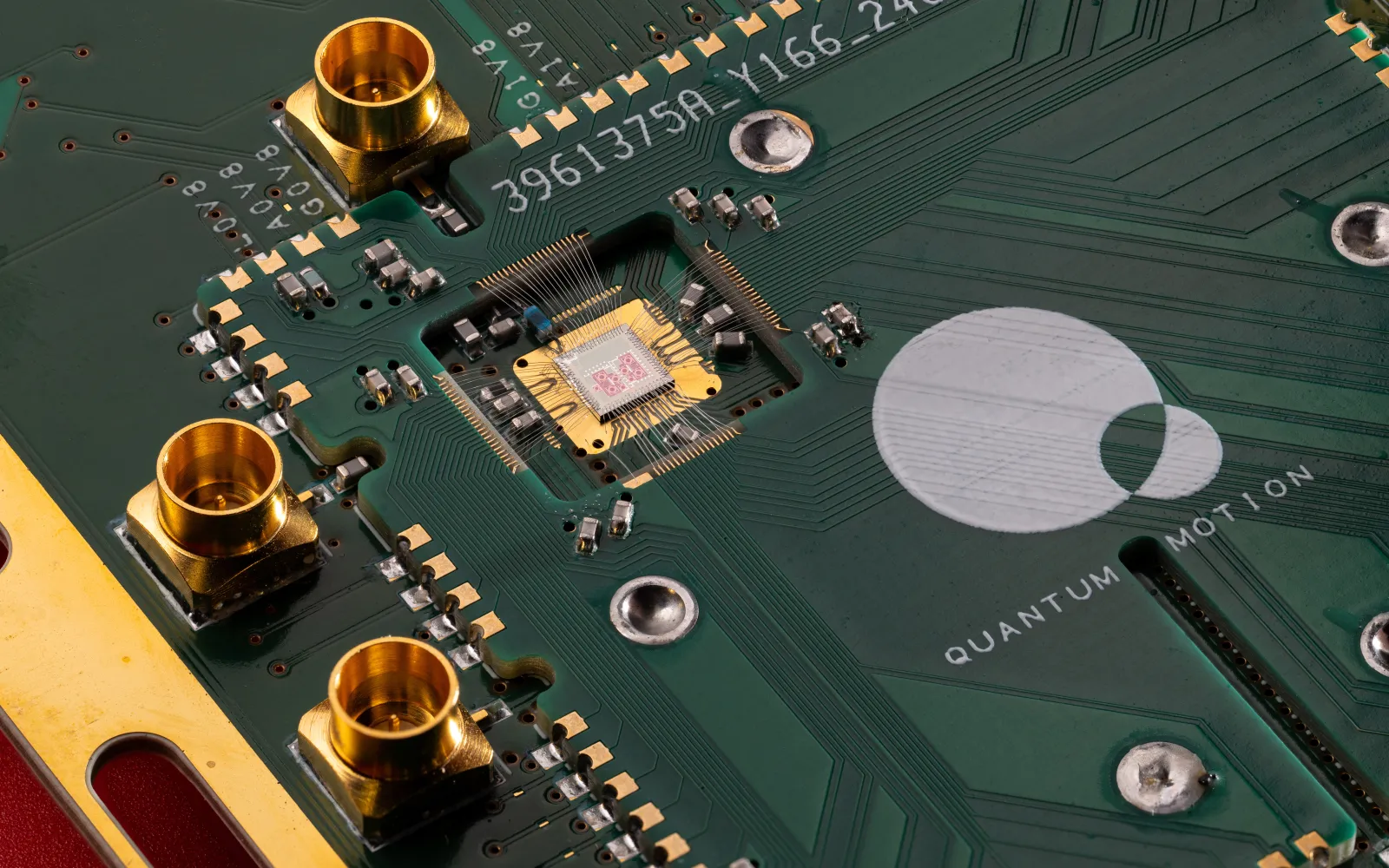
So we took it seriously when DARPA announced recently that 11 companies had passed from Stage A, conceptual design review, to Stage B, where their path to commercial usefulness can be more rigorously tested. While the Stage B companies represent a menagerie of quantum technologies, from neutral atoms to trapped ions, a handful are pursuing a technology that we believe has great potential and which we are now for the first time actively pursuing direct investments in: silicon spin qubits. At a basic level these companies — London-based Quantum Motion, Nordic SemiQon, and Diraq of Sydney — are encoding their qubits in the spin of single electrons confined in quantum dots on silicon; these “artificial atoms” are controlled by nanoscale gate electrodes on the surface of a chip, much like traditional transistors. This approach has two advantages. Silicon spin qubits are up to a million times smaller than other qubit types, making them a natural candidate for building quantum computers on the mega-qubit scale and beyond. The other key advantage is that the computing industry has already been built around silicon, and existing CMOS foundry technology can be repurposed for the fabrication of data-center-ready quantum processors.
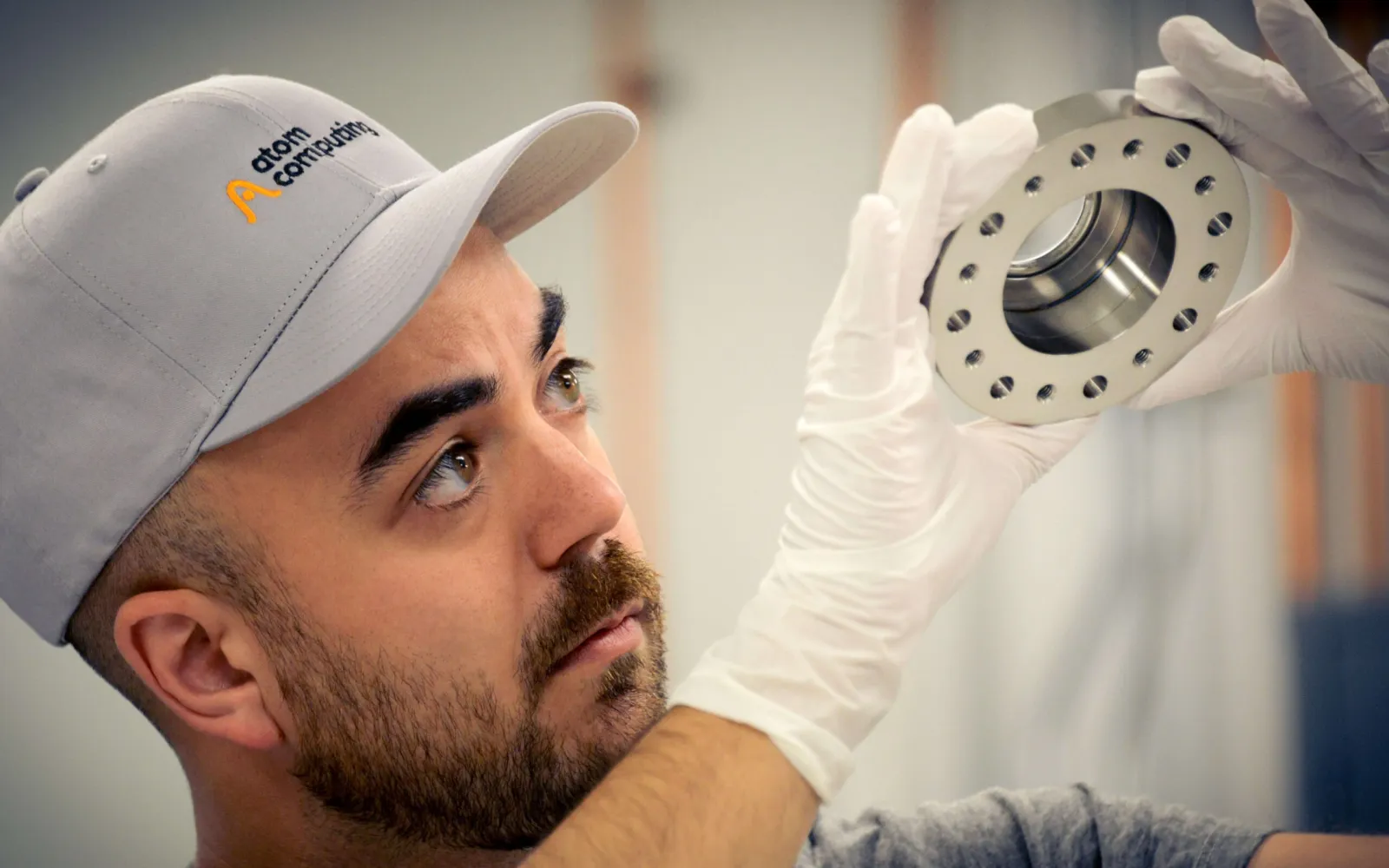
But while qubits in silicon show great promise, we don’t see a need to go all in on any one technology. For example, we’re not at all surprised that Atom Computing, a DCVC portfolio company, has also moved on to Stage B. Last year, the Boulder-based outfit went into partnership with Microsoft in order to combine its highly scalable state-of-the-art neutral-atom qubits with the tech giant’s sophisticated error-correction and qubit virtualization software. IonQ, in which DCVC is also a material investor, also moved on to Stage B, and last month, the College Park, MD-based company demonstrated 99.99% fidelity between two of its trapped ion qubits. This is a key technical milestone that paves the way to suppressing error rates down to a level where fault-tolerant quantum computers become a reality.
Reducing physical qubit overhead is another important pathway to the era of fault-tolerant quantum computing and is what excites us about another recently launched company out of Sydney, Iceberg Quantum. Aspiring to be the ARM of the quantum computing world, its founders are developing new quantum architectures based on low-density parity-check (LDPC) codes that will allow hardware makers to do more with the resources they have, accelerating the arrival of useful quantum computing. Iceberg is a type of company that didn’t exist even a couple of years ago, another signal of the rapid pace of the technology’s progression.
Quantum technology extends beyond computing into the realms of sensing and networking technologies. We’ve been excited about DCVC portfolio company Q‑CTRL’s progress in using its deep understanding of atomic manipulation and control to develop a quantum-assured, compact (smaller than a PC-tower), MILSPEC-durable navigation system able to guide aircraft, ships, land vehicles, and submarines with high precision without relying on conventional positioning, navigation, and timing (PNT) signals. But as with classical integrated circuits, quantum innovation demands both the development of capabilities and the optimization of relevant device size. For that reason, and in synergy with Q‑CTRL’s efforts, we also recently backed Mesa Quantum, which is developing chip-sized sensors for PNT applications in GPS-denied environments. Mesa’s technology relies on vapor cells, tiny chambers filled with a cloud of vaporized alkaline metal atoms, to build incredibly accurate atomic clocks and other sensors that are both tiny and relatively cheap to manufacture.
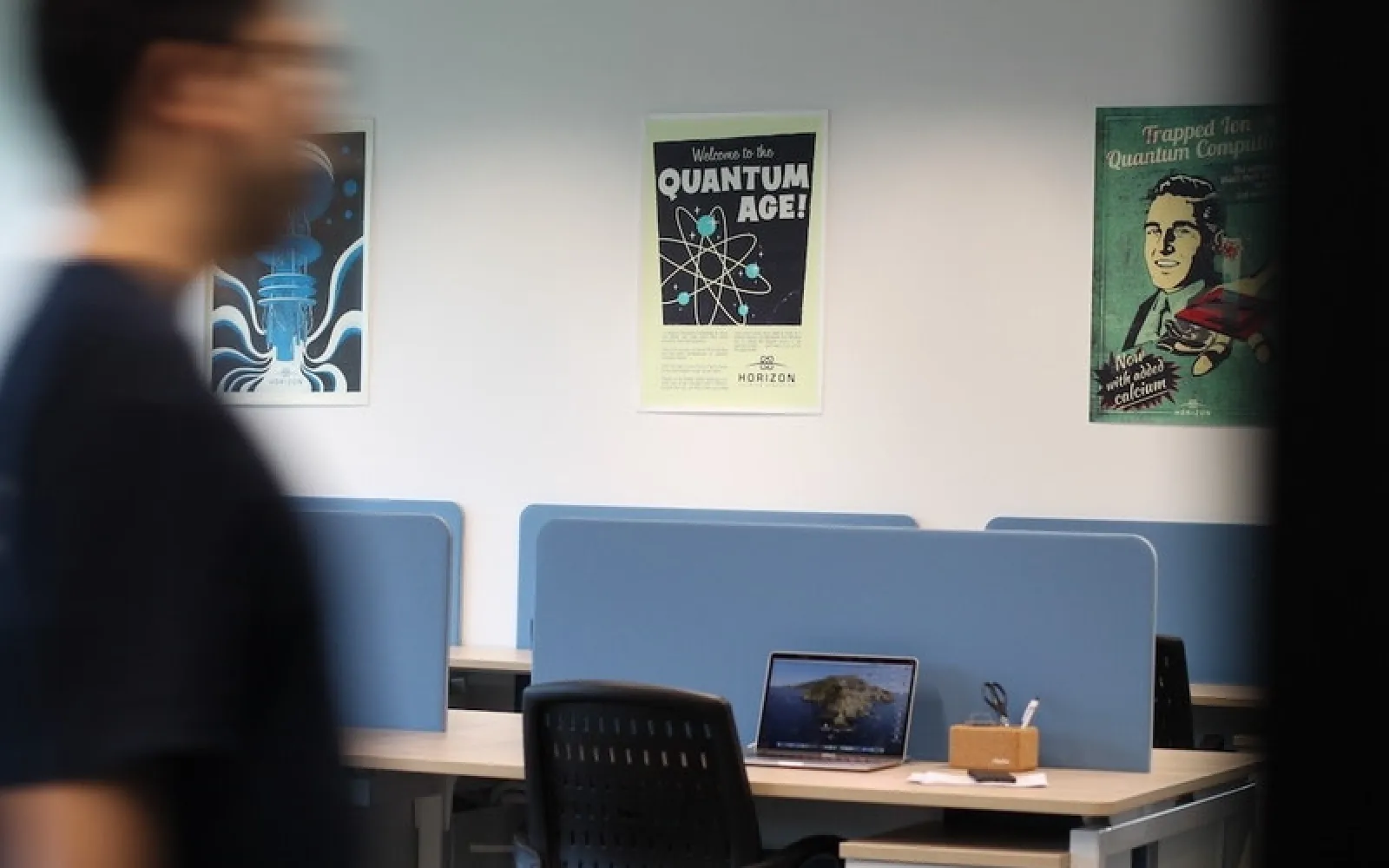
Quantum software’s moment will come, which is why we are very happy seed investors in the enabling technology leader in that space, Horizon Quantum. That said, for now we believe the bigger and earlier liquidity opportunities lie in those entrepreneurs developing the foundational hardware on which the killer apps to come will be built. As with all hardware companies, the deep tech breakthroughs that inspired their launch only represent the first steps on their road to commercialization. Other issues to contend with include securing access to key materials, identifying chokepoints in supply chains, and scaling up manufacturing operations. Take, for example, the companies pursuing silicon spin qubits; while it helps that semiconductor fabs already exist to make their chips, processes will need to be customized and retooled for these specific applications. That’s one place where we can step in as needed. DCVC has a deep roster of partners who have the technical expertise, business experience, and global networks of connections to offer unique assistance to portfolio companies in securing access to manufacturing lines ahead of competitors. With guidance like this and rigorous independent programs like DARPA’s QBI, the foundations are being laid for a robust and resilient quantum ecosystem. From there the possibilities are limitless.