
Callosum
Orchestration software for an era of multimodal, not monolithic, artificial intelligence
From my work with DCVC-backed TechBio companies such as Kanvas, Noetik, Proxima, and Relation, I know that frontier AI models are rapidly helping us to understand complex biological networks and unlock cures for diseases we thought were untreatable. When we started working with Proxima in August 2025, they were doing three thousand in silico experiments per run, designed to generate new small-molecule ligands that connect existing proteins in the body and give them unprecedented powers. Now they’re doing thirty thousand experiments per run.
We are seeing this exact same structural explosion play out beyond biological networks and straight into the core of enterprise AI computing. The modern software layer has evolved past simple, single-turn chatbot interactions into long-running, autonomous agentic loops that execute thousands of complex operations behind the scenes. The challenge is that this transition to persistent, multi-agent execution has caused corporate token consumption to expand exponentially.
And that’s creating a dilemma for users of both scientific and enterprise computing. The unit cost of AI inference — whether measured in tokens, GPU-hours, or completed model runs — isn’t falling fast enough on rented hyperscaler infrastructure to offset the exploding number of model calls that advanced AI workflows now require. By every metric that matters — compute, energy, real estate, water — today’s most powerful AI models are wildly expensive to operate, even before the arrival of AGI.
The founders of Callosum, a UK-based AI infrastructure company we’ve backed as part of a $100 million seed round, are capitalizing on a simple insight that could cut through this dilemma: AI is increasingly multimodal, not monolithic, and you don’t have to route every API call to the most expensive model or the most expensive chip. In fact, you can automate this routing such that your computing tasks get executed by the cheapest available model on the cheapest available hardware, within the scheduling constraints you’ve specified. (Bloomberg coverage here).
Making this happen is far from simple — but that is where Callosum excels, building algorithms that can meticulously decompose clients’ token-intensive workloads and send them to whatever model and whatever silicon offers the most efficiency for a specified task. Occasionally, that might be ChatGPT 5 running on a top-of-the-line NVIDIA GB200 chip rented from a hyperscaler like Amazon Web Services. Other times, it might be a smaller model like Llama 70B or Gemma 4 31B running on a specialized wafer-scale AI chip from Cerebras. In one matchup of these specific configurations, Callosum found that Llama 70B running on ultra-low-latency Cerebras silicon delivered the same accuracy as ChatGPT 5 at five times the speed and one-fifth the cost. (And in fact, Cerebras announced today that it has formed a strategic partnership with Callosum, in which Callosum will make access to Cerebras capacity available through its APIs.)
“The industry has been betting that one model or one kind of chip will rule them all,” says Danyal Akarca, Callosum’s Co-Founder and CEO. “But nature shows us the opposite. Intelligence is collective and will emerge from many specialized systems working together. We believe AI needs a new axis of scaling, where models and hardware co-evolve as a single system. That’s how we build AI that is not only more capable, but dramatically faster, more affordable and far more energy-efficient.”
The AI companies and hyperscalers aren’t good at cross-chip, cross-model orchestration themselves because they have a vested interest in pushing their own models and chipsets. To be the Switzerland of AI orchestration, as Callosum aspires to become, you must be independent — and you need to have a finer, deeper understanding than the hyperscalers themselves of which models and which chips are best for different types of problems and workloads.
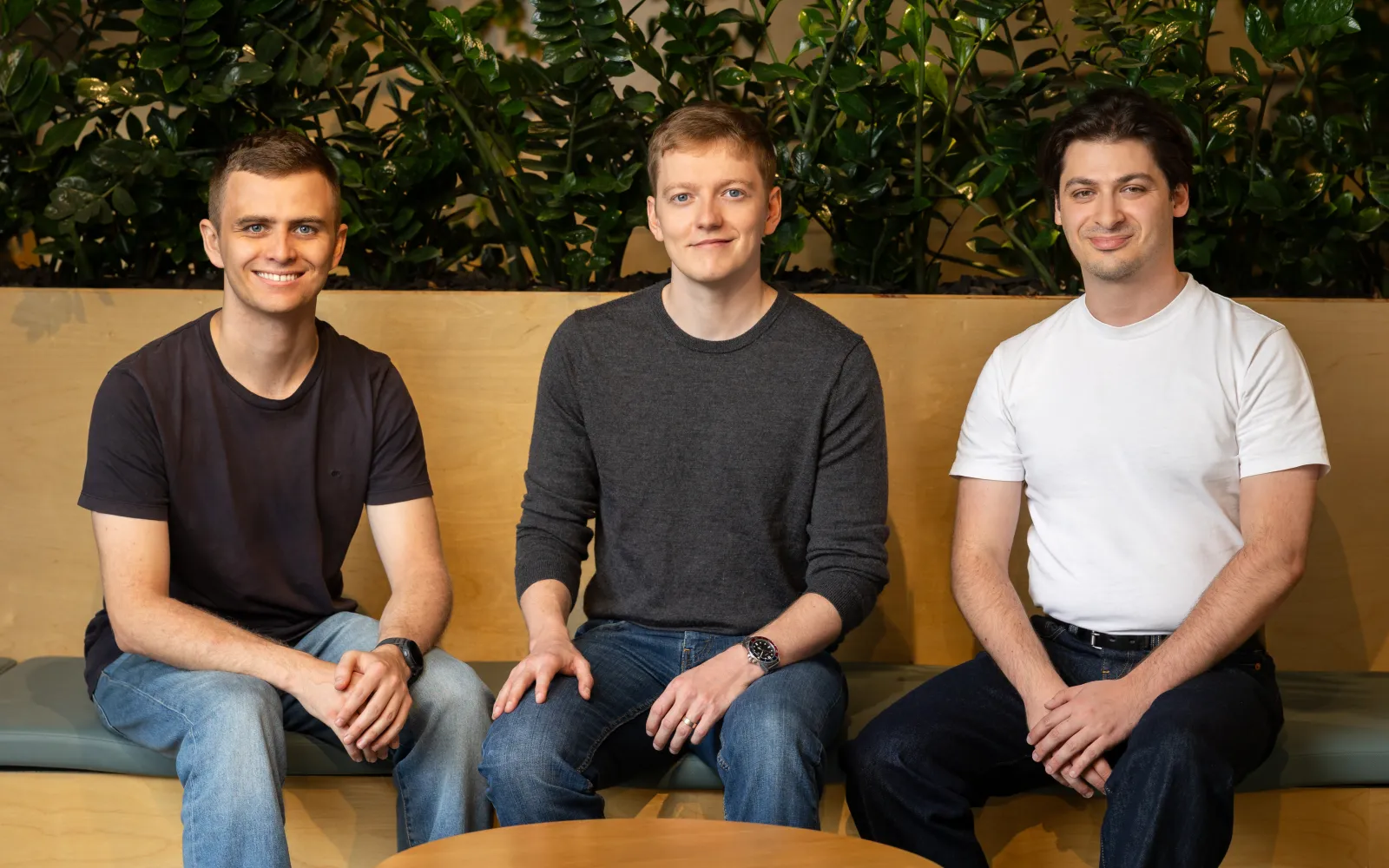
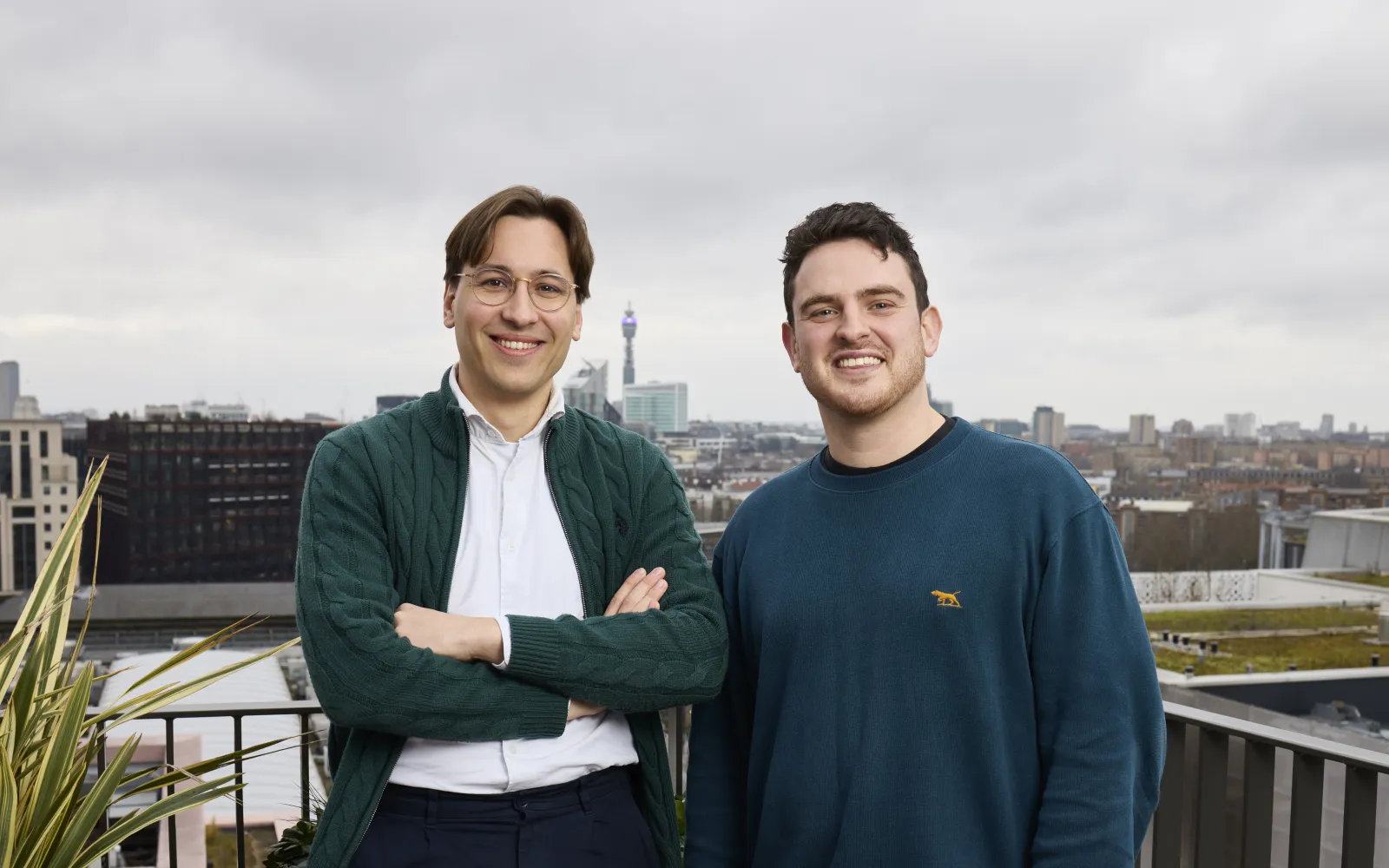
Akarca co-founded Callosum with Jascha Achterberg. Both are neuroscience PhDs from the University of Cambridge. They had the technical vision to apprehend that even as chip companies are building dozens of types of silicon optimized for specific workloads nobody has built the software needed to orchestrate work across all of them without locking users into any one chip family, cloud, or model type. In that sense, Callosum has the potential to be its generation’s equivalent of VMware — the company that broke up the marriage between proprietary hardware and proprietary operating systems back in the 1990s by making it easy to run multiple operating systems on an x86 desktop computer or server.
Equally important to me, Callosum’s founders are not LLM fundamentalists who think chatbots are the key to achieving AGI. They argue, and I agree, that the systems where jobs can fluidly reach the most efficient substrates — and in which chipmakers and model builders can freely play off one another’s innovations — will be the ones that support the biggest advances, in both enterprise and scientific computing. (This idea, borrowed from biology and complexity theory, sometimes goes by the label multiscale competency architecture.)
“What the industry has believed is that the fundamental units of intelligence we should be thinking about are models, parameters, and weights. What we believe is that that’s not inherently true,” Akarca tells DCVC. “There may be cases where a single model will be the perfect one to solve a problem. But there are other systems where you actually have 10 or 20 models interacting, each operating on different hardware with different abilities, cost, speed, and performance. Across that collective system, maybe you could still solve the problem with a fraction of the number of parameters you had before.”
The seed round Callosum is announcing today, with DCVC participating, will help the company expand its team, accelerate its R&D, and buy compute resources. Callosum was the first company to win equity funding from the UK’s new Sovereign AI fund, and additional pre-seed, non-equity funding came from the UK’s Advanced Research & Invention Agency (ARIA).
This state-backed infrastructure alignment is already translating into a massive, multi-vendor deployment network. On the demand side, Callosum is actively deployed with hyper-growth, token-heavy application platforms to absorb their surging agentic workloads. On the supply side, the company is bridging the gap to next-generation silicon by utilizing cloud-native specialized processors like AWS Trainium and Inferentia and forming direct partnerships with hardware pioneers like Cerebras and other major AI chip platforms (which it will be announcing shortly). Furthermore, Callosum was named in the UK government’s billion-pound AI hardware plan — which is building heterogeneous compute and can benefit from its orchestration stack — and is also part of the South Korean government’s Rebellions chip initiative. By uniting these fractured supply-side breakthroughs with exponential enterprise demand, Callosum is building the cross-vendor operating layer necessary to ensure the agentic era can scale sustainably.
We believe token-intensive businesses will be happy to pay Callosum to help reduce their compute-rental expenses and bend the inference cost curve downward. I’m also excited to watch as the company eventually brings new efficiencies to scientific computing workflows. I’ve seen how AI has the potential to revolutionize drug discovery — but I can also see that if we don’t get some control over the cost of compute, that revolution won’t be affordable for anyone. That’s why we’re enthusiastic backers of Callosum, which we believe provides the necessary orchestration layer to ensure that the AI age is economical and profitable.