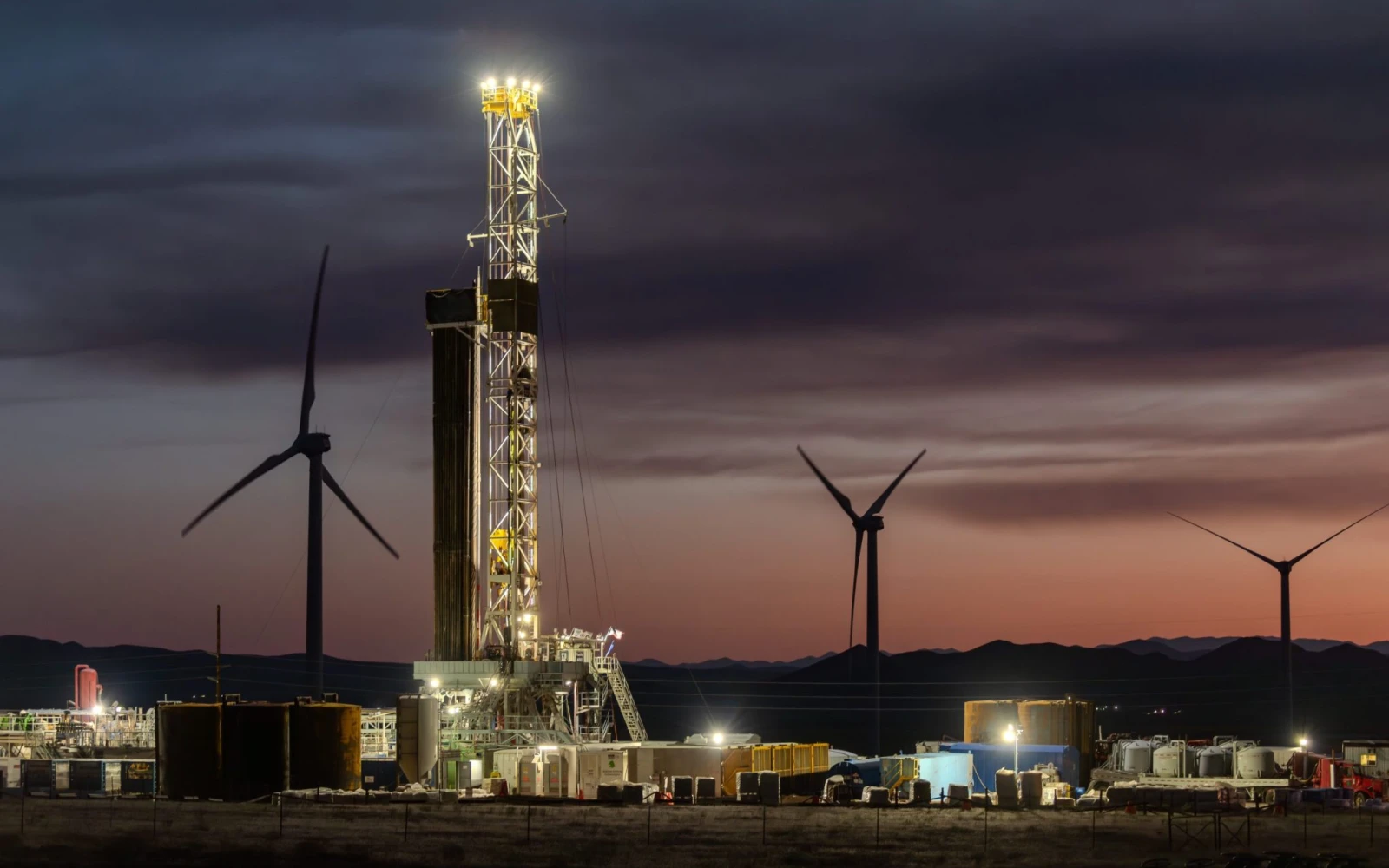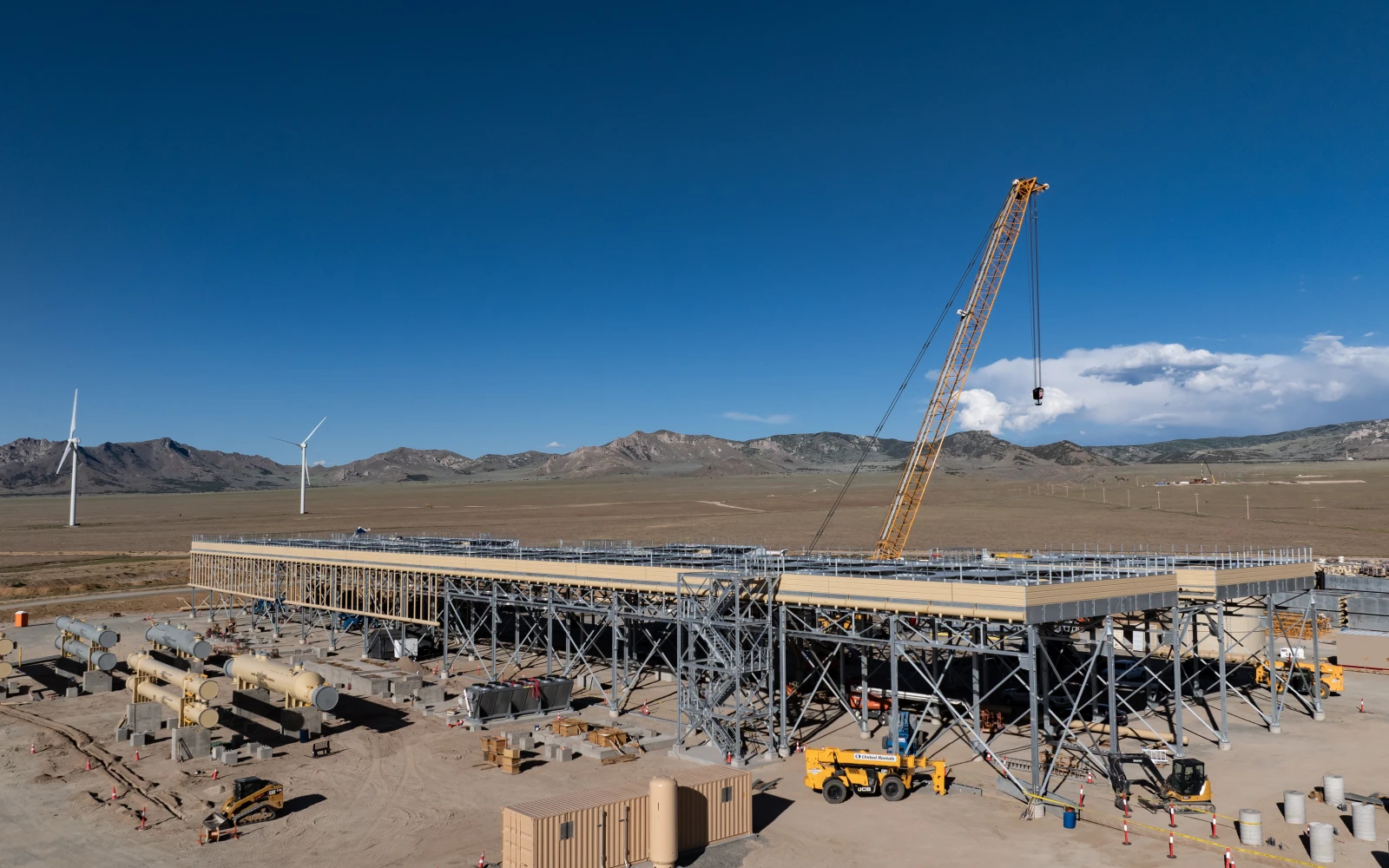
Enhanced geothermal systems (EGS) have crossed from technical plausibility into infrastructure-scale deployment. The key to efficient geothermal energy production is reliably getting sufficient hot water out of the ground to make power. Traditional geothermal wells could be built only in rare geologic formations where naturally occurring water was flowing through hot, permeable rock. In EGS, by contrast, pump water flows down an injection well, travels horizontally through fractures in the rock, absorbs heat, rises back up to the surface through a production well, and passes heat to a turbine, which converts it into electricity. Fervo Energy’s addition of horizontal drilling and hydraulic fracturing means the well lengths are much longer and the fracture surface area is engineered — creating enough hot surface area to ensure significant power production.
Exponential learning curves — where performance improves and cost declines in a virtuous cycle with cumulative deployment — are core to the economics of deep tech innovation, especially in climate tech. Fervo Energy, which we’ve backed since 2022, is riding such a curve. Between 2022 and 2025, the company reduced drilling times by approximately 75 percent and reduced per-foot drilling costs by about 70 percent. The two wells at Fervo’s first “Project Red” site in Nevada took between 65 and 75 days to drill, at more than $800 per foot; more recent wells at its Cape Stationsite in Utah have reached their total depth in under 20 days, for 200 – 300 per foot. CEO Tim Latimer has described the company’s strategy as one of repetition rather than reinvention. “For us, going 100 times bigger means doing exactly what we’ve already done, but just 100 more units of it,” he told Volts podcast host David Roberts. “This is the whole key of the repeatability of making this work.”
Just as important, Fervo says Project Red in Nevada has not experienced the kind of thermal decline that often plagued traditional geothermal projects. Now that it has substantially derisked its technology, Fervo plans to take a modular, standardized approach to scaling up: it will build 50-megawatt power facilities it calls GeoBlocks and collect them into multi-gigawatt energy hubs called GeoClusters, spreading across nearly 600,000 acres of land where it has already obtained geothermal leases. In other words, Fervo’s growth is unlikely to resemble the slow, site-specific trajectories historically seen in the geothermal sector — it could look more like the learning curves followed in the past by the semiconductor, solar, and battery industries.
Publicly announced milestones suggest that EGS is already moving beyond pilot scale. At Cape Station, Fervo expects to deliver approximately 100 megawatts to the grid by early 2027, with an additional 400 megawatts to follow. As of the end of March 2026, the company had 658 megawatts of power purchase agreements in place, as well as an agreement with Google to develop up to 3 gigawatts of capacity to power current and planned data centers. Fervo raised about $2.2 billion in an oversubscribed IPO this May described by Fortune as “the biggest clean energy IPO ever.”
The National Renewable Energy Laboratory estimated in 2023 that the United States harbors 230 gigawatts of potential geothermal energy at depths of less than 4 kilometers — a slice of the Earth’s crust that is accessible with current-day drilling technology. (U.S. utilities had about 1,230 gigawatts of total capacity in 2024.) “If we only ever produce a few hundred gigawatts of power in the United States, only get to the point where we’re 20 percent to 30 percent of U.S. electricity and that’s it, it’s probably still worth doing,” Latimer told Volts. “But I still think that as we get to economies of scale and come down the cost learning curve, we’re going to be able to go to even deeper resources and make that work.” And that could make geothermal one critical element in a future of abundance and resilience.