Quantum hardware has finally crossed the line from “perpetual research project” to having a credible 7‑to-10-year runway to commercialization, and that changes the capital calculus. Across modalities, qubit coherence time, fidelity, and fabrication consistency are ticking up, error rates are moving down, and government benchmarks have emerged to make overall progress measurable. Now that qubits are beginning to look more like manufacturable components — noisy ones, but good enough to assemble into reliable logical machines — there are many opportunities for deep tech venture investors to help.
Better qubits — with better gate fidelities, longer coherence times, and lower fabrication variability — are one half of what’s exciting today in quantum computing. The other half of the story is about the emergence of practical, low-overhead quantum error correction codes that mean fewer physical qubits are needed for meaningful computation. Together, these advances create a realistic path toward building logical qubits at scale. We’ll cover qubit fidelity and fabrication in this section, and in the next section we’ll talk about error correction and the journey to fault-tolerant quantum computers.
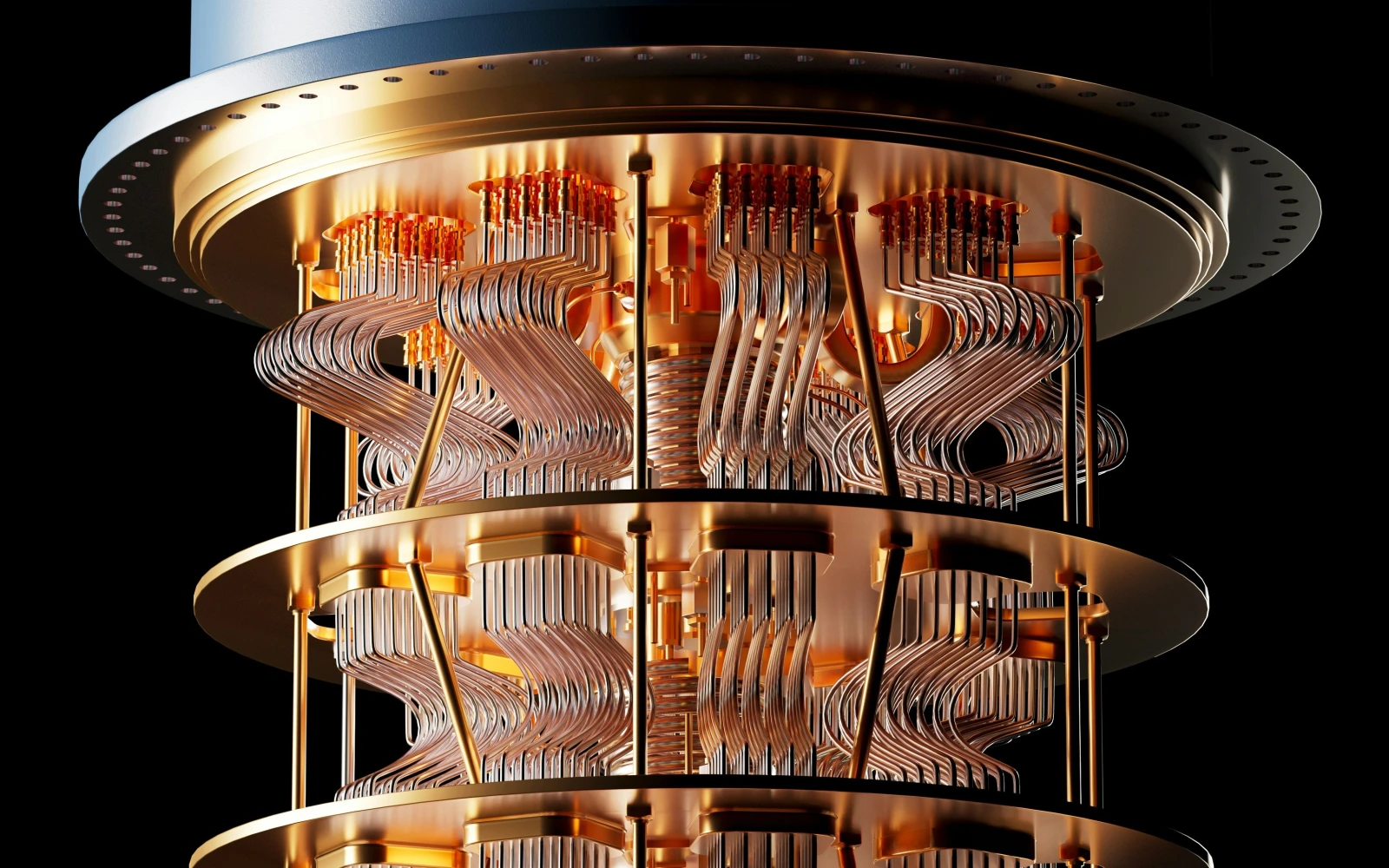
Qubits can be implemented physically in any medium that can be held in a coherent state of superposition, and there are many engineering approaches to doing this. Superconducting qubits, represented in Josephson junctions inside huge dilution refrigerators built by companies like IBM, Google, and Rigetti, were the first serious industrial examples. To be commercially useful, however, a quantum computer must be fault-tolerant, with relatively low overhead for error correction: in other words, it should be designed from the bottom up to minimize and compensate for the inevitable errors in its quantum gates. Makers of the first-generation superconducting systems scaled qubit counts into the hundreds, proving that industrialization is possible. But their systems were plagued by short coherence times and high error rates — and they were hard to build at scale.
By building a diverse portfolio of well-targeted investments we can expose ourselves to the full spectrum of quantum opportunities while retaining the flexibility to double down if any given company begins to break away from the pack.”
Matt Ocko
Co-Founder and Managing Partner, DCVC
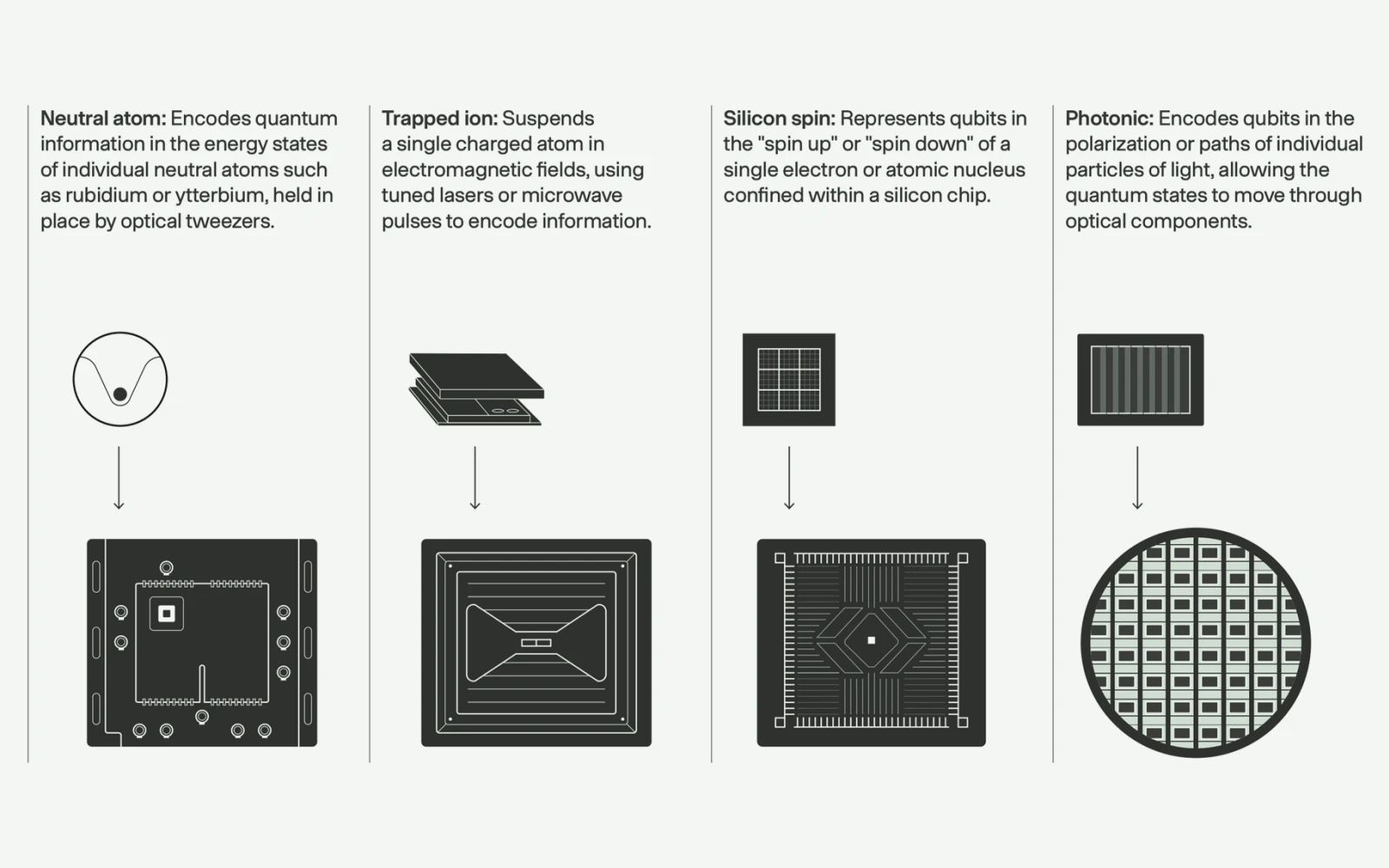
As investors, we’re excited about three newer architectures that seem to have credible engineering paths to fault tolerance: trapped ions, neutral atoms, and silicon spin. None of these architectures dominate yet — and we don’t see them as competitors in a race. We
agree with the U.S. Defense Advanced Research Projects Agency’s Quantum Benchmarking Initiative (QBI) that multiple companies could demonstrate a path to utility-scale operation, where computational value exceeds cost.
Dr. Prineha Narang is an Operating Partner at DCVC, Howard Reiss Chair in Physical Sciences at UCLA, and head of a lab working at the intersection of quantum physics, quantum photonics, and quantum information science. She had close interactions with the DARPA program managers overseeing QBI. She notes that multiple companies and qubit technology approaches — including trapped ions, neutral atoms, silicon spin, superconducting processors, and photonic systems — have been selected to advance to “Stage B” of the initiative, where they’ve been judged to have an R&D plan capable of realizing a utility-scale quantum computer by 2033. “The program was not intended to pick winners and losers — just to say who has a credible path to the fault-tolerance goalpost,” Narang emphasizes.
Trapped-ion systems: Fidelity first
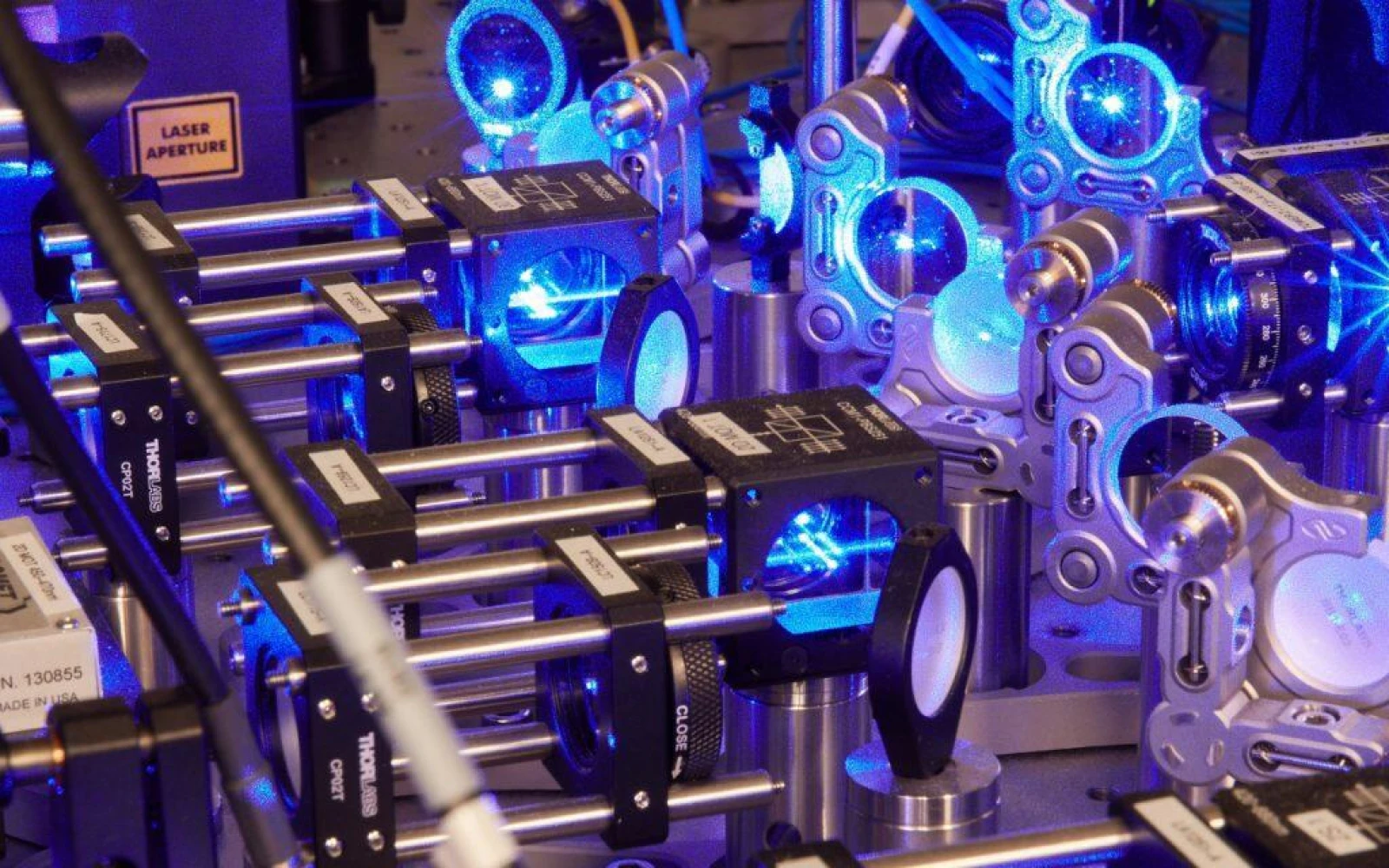
We know what “good qubits” look like: they’re controllable, with long coherence times and high fidelity. In the trapped-ion approach, qubits are encoded in the internal atomic states of charged atoms confined in an electromagnetic field. Because they’re suspended in an ultra-high vacuum, where they’re shielded from environmental noise and material defects, these qubits have coherence times measured in seconds or minutes, as opposed to microseconds or milliseconds. And because all the qubits are physically identical, and controlled by precisely tuned microwave or laser interactions, there’s little variability or material disorder that could throw off two-qubit quantum logic gate operations.
UK-based Universal Quantum is one of the leaders in this technology. The company is systematically solving the problems with laser stability and optical alignment that have been the main pain points as trapped-ion systems have scaled up. The company uses a combination of global microwave signals and locally generated fields to move and address individual qubits and reduce laser complexity. While the ions themselves are laser-cooled to microkelvin temperatures, the apparatus runs at a relatively balmy 70 K (-203 C), meaning it doesn’t need to be placed inside a dilution refrigerator. Just as important, Universal Quantum has found a way to fit its qubit arrays into microfabricated modules on silicon, which it integrates with classical control chips and digital-analog converters to help shuttle information into and out of the qubits.
The company already has a customer: it’s building a 100-qubit system for the German Aerospace Center (DLR) that could eventually be scaled to millions of qubits, thanks to its repeatable modules. The more physical qubits are available, and the lower their error rate, the more logical qubits can be assembled and the lower the probability of logical qubit failure. That sounds to us like the beginnings of a classic industrial scaling curve.
Neutral-atom systems: Reconfigurability first
Architecture and layout can be just as important as device physics. In neutral-atom quantum systems, qubits are encoded in the atomic energy levels or nuclear spin of electrically neutral atoms of alkali or alkaline-earth elements such as rubidium or ytterbium. When excited to high-energy “Rydberg states,” neutral atoms can become entangled with other nearby Rydberg atoms, allowing the formation of quantum logic gates. But here’s the key: because they’re trapped by individually controllable optical tweezers (laser beams), neutral atoms can be dynamically shuffled to new positions, which means they can be reconfigured on the fly to specify which atoms form gates. The kind of connectivity between gates that’s baked in with lithographically fabricated silicon systems thus becomes software-defined in these arrays. This means, among other things, that circuit layouts can be optimized for specific problems, and that lost qubits can be detected and reloaded.
We’re intrigued by and/or already invested in three companies building neutral-atom quantum computers. One is Atom Computing, where we first invested in 2018, and doubled down in 2026. The Boulder, Colo.-based company offers a commercially available quantum computer called AC1000 that ships with 1,200 physical qubits that can be combined into 50 or more logical qubits. The physical qubits are encoded in atoms of ytterbium-171, whose high fidelity and long coherence times make it easier to combine them into reliable logical qubits. In 2024 Atom formed a partnership with Microsoft to strive for what the tech giant calls “Level 2” quantum computing, where logical qubit error rates are low enough to complete complex computations. Atom is just one of just 11 companies that have graduated to QBI’s Stage B. It will also benefit from a $100 million equity investment from the U.S. Department of Commerce, part of a package of nine investments in utility-scale quantum computing announced in May that materially involves four DCVC portfolio companies.
The other neutral-atom quantum builder we’re backing is Logiqal. (Yes, all of the C’s in the quantum industry are qollapsing into Q’s.) Logiqal, like Atom, is using ytterbium for its qubits; it’s focused on building scalable systems from manufacturable sub-modules controlled by silicon optoelectronics.
Recent studies have shown that cryptographically relevant instances of Shor’s algorithm for finding the prime factors of an integer could be executed on a neutral-atom quantum computer with as few as ~10,000 qubits. “For a long time, neutral-atom was yet another technology that was a lab curiosity,” says Narang. “People were doing Nobel Prize-type experiments, but nobody was really thinking of it as how quantum computing would be implemented using these systems. But now it’s a technology where — between Atom Computing, Logiqal, and others — there’s just insane amounts of traction, and it seems like they’ll be very good at solving all kinds of encryption problems.”
Silicon spin systems: Manufacturability first
One of the biggest signs that quantum computing is becoming real is that it has entered the semiconductor supply chain. In silicon-spin quantum systems, a qubit is represented in the spin of a quantum dot — a single electron confined in all three spatial dimensions.
The nanoscale potential wells that trap these electrons can be defined lithographically. That means silicon-spin qubits can be fabricated using machines and processes found throughout the global fab ecosystem; can theoretically be created in extreme numbers, at extreme density; and can easily be integrated with classical control electronics.
“With quantum dots I don’t have a real estate problem on a chip because I can get millions of them on there,” Narang says. “Moving toward that required some insane engineering challenges to be solved. But that technical risk is retired now, so that’s why there are three silicon-spin qubit companies that have moved to the next stage of DARPA’s QBI.”
The most advanced silicon-spin companies have the promise of being able toleapfrog the superconducting, trapped-ion, and photonic qubit companies.”
James Hardiman
General Partner, DCVC
One of them is U.K.-based Quantum Motion, a company we backed starting this year. It starts with standard 300-millimeter silicon wafers and uses the standard chip fabrication process to print quantum processing units (QPUs) with all the compute, readout, and control elements needed to perform useful operations. One of the more insane challenges the company had to solve was that the qubit layer in silicon QPUs operates at very low temperature, just tens of thousandths of a degree Kelvin, while the cryogenic control electronics naturally operate at temperatures above 1 – 4 Kelvin and the classical control systems operate at room temperature — so much higher that the leaking heat can make it difficult to reliability initialize qubits.
Quantum Motion found ways to keep the temperature gradient from becoming a showstopping constraint, principally by working with pairs of qubits and using a technique called “algorithmic cooling” to transfer entropy from one to the other (in effect, using logic operations to create higher-purity qubits than the temperature would normally allow).
For the dense wiring and control electronics needed to make these initialization protocols feasible, Quantum Motion also depended on advanced fabrication and packaging techniques, an area where silicon foundries such as GlobalFoundries and Imec are making huge strides.
In 2025 Quantum Motion delivered what it calls the world’s first full-stack silicon spin quantum computer to the U.K.’s National Quantum Computing Centre. It has three server racks positioned next to a dilution refrigerator housing the quantum chips, and could fit nicely into any data center. The company’s goal is to scale up to millions of qubits per machine, with qubit fidelities high enough to support the latest error correction protocols. Narang calls Quantum Motion “a very exciting company.” And because there’s already a huge global industry built around manufacturing silicon chips, “the most advanced silicon-spin companies have the promise of being able to leapfrog the superconducting, trapped-ion, and photonic qubit companies,” says DCVC General Partner James Hardiman.
Again, though, there likely won’t be a single path to fault-tolerant quantum computing. By investing in a range companies, “We’re not trying to say ‘we don’t know which type of qubit will win, so let’s do a bunch of them,’” Narang comments. “We’re saying, multiple qubits could win, and they might also address different types of problems.”